Scene Card
Use a scene card template to capture each scene goal, conflict, and outcome, then connect cards to see how scenes drive each other.
Writers who plan scene by scene and want each scene to change the situation.
Map the turning points first.
Put these beats down before you write the scene list. The order matters less than the connections: what causes what, what mirrors what, and where the story changes direction.
- 01Scene Goal
- 02Point of View
- 03Conflict
- 04Turn
- 05Outcome
- 06Value Change
- 07Hook to Next Scene
How Mad Max: Fury Road works as scene cards
Almost every sequence fills a card in one line. Goal: steal the wives, take the rig, reach the Green Place, turn the war rig around. Conflict: a war party, a dust storm, a canyon that is also a trap. Turn: the Green Place is a poisoned bog, so the only water left is behind them. Outcome: the convoy reverses. Value change: from flight to assault. Hook: Immortan Joe still stands between them and the Citadel. If a stretch of chase cannot fill those fields, it is the same scene written twice. The film is a stack of cards that each force the next one.
From framework to working map.
- 01
Give each scene a card with its goal, the conflict, and how the situation changes.
- 02
Draw an edge from each scene to the one its outcome sets up.
- 03
Cut or rewrite any scene whose card shows no change in value or information.
Best fit
- Scene-by-scene planners
- Screenwriters building a sequence
- Revising a saggy middle
- Discovery writers organizing a draft after the fact
Watch for
- A scene where nothing changes is usually two scenes or none.
- Cards multiply fast, so keep the focus on goal, conflict, and change.
A little context before you map.
A useful scene card records the viewpoint, the scene goal, the conflict that complicates it, and how the scene ends differently from how it began, often as a shift in a value such as safe to threatened.
An outline lists scenes in order. A scene card template links them by cause and effect, so you can see which scenes set up others and which ones do not move the story.
Screenplay Outline
Logline first, then act breaks and sequences, then scenes that change the situation.
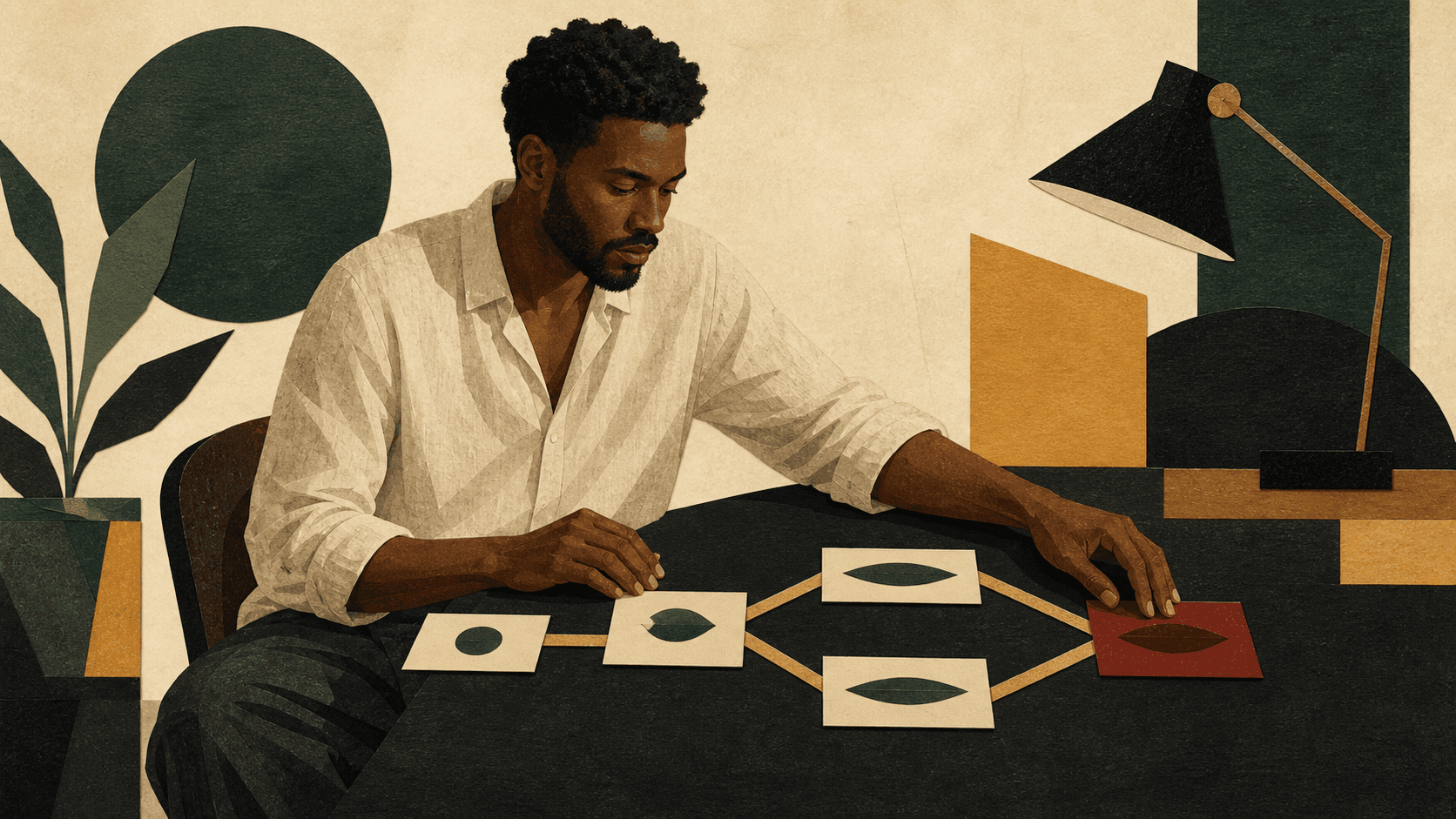
Novel Outline
From premise to last chapter, with character turns and subplot checkpoints sitting on the same spine.

Three-Act Structure
Setup, confrontation, and resolution on one map, loose enough for a short story or a doorstop.