Kishotenketsu: A Four-Part Story Structure Beyond Conflict
Learn Ki, Sho, Ten, and Ketsu, why Kishotenketsu does not depend on conflict as its engine, and how to outline the four-part structure visually.
By Elias Ward
Founding writer at Scyn
Key takeaways
- Kishotenketsu organizes a story into introduction, development, turn, and connection.
- Conflict can appear in the story, but it does not have to drive the structure.
- Ten introduces a contrasting element or perspective. It is more than a surprise twist.
- Ketsu makes the relationship between the earlier material and the turn visible.
- The structure works at several scales: a whole novel, a subplot, a chapter, or a short scene sequence.
Most Western structure guides begin with conflict. A protagonist wants something, an opposing force blocks them, and pressure rises until one side wins. Kishotenketsu gives writers another way to organize change. It builds meaning through development, contrast, and connection.
That difference has led to a loose description of Kishotenketsu as "conflict-free storytelling." The label is misleading. A Kishotenketsu story may contain arguments, danger, rivalry, or loss. The structure does not require conflict to connect one part to the next.
What does Kishotenketsu mean?
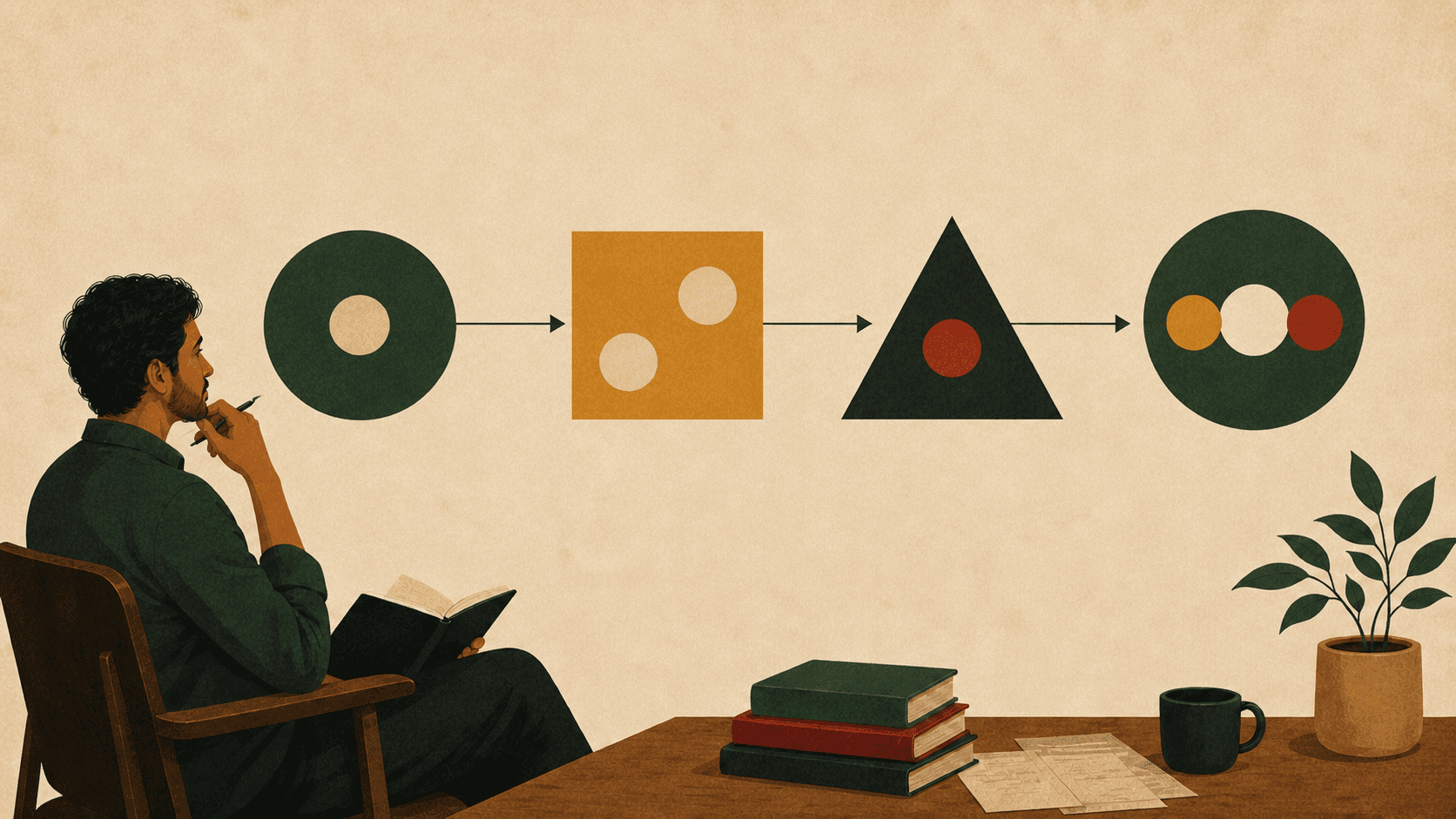
The name combines the four parts of the structure:
| Part | Working meaning | Structural job |
|---|---|---|
| Ki | Introduction | Establish the subject, situation, pattern, or characters. |
| Sho | Development | Extend the material and let the reader understand its ordinary relationships. |
| Ten | Turn or change | Introduce a contrast, new angle, or apparently separate element. |
| Ketsu | Connection or conclusion | Bring the earlier material and the turn into a meaningful relationship. |
The form is related to the Chinese four-part composition often called qichengzhuanhe and developed through several East Asian writing traditions. Its use varies by language, period, and medium. Treating it as one fixed Japanese formula erases that wider history.
Gabriel Oh's academic study of Kishotenketsu and its applications to prose writing describes a narrative model where development, events, and revelations can do the work that escalating tension performs in many Western structures.
The turn changes how the reader sees the first two parts. The conclusion makes that relationship legible.
Ki: introduce a pattern worth noticing
Ki gives the reader stable material. It might establish a place, a daily practice, a relationship, or a visual detail. You are teaching the reader what to notice before asking them to reinterpret it.
An introduction still needs specificity. "A baker works in a village" gives the later sections little to develop. "Before sunrise, a baker leaves one unsold loaf on the flood wall" establishes a person, an action, and an unexplained pattern.
Ki can contain a problem. Its job is not to launch a fight around that problem. Give the reader enough context to recognize what changes later.
Sho: develop rather than escalate
Sho extends the pattern. The baker leaves a loaf each morning. Different residents take it. She notices who comes early, who waits, and which days nobody arrives.
In a conflict-led outline, the second movement often makes opposition stronger. Sho can increase complexity without turning that complexity into a contest. Repetition with variation works well because each return adds information.
Development must still move. A sequence of pleasant but interchangeable moments produces drift. Each beat should sharpen a relationship, alter an expectation, or add a detail that Ketsu can use.
Ten: introduce a meaningful contrast
Ten turns the composition by bringing in material that does not initially fit the established pattern. One morning, the baker follows the person who takes the loaf. She finds several untouched loaves arranged along the riverbank beside faded photographs.
The turn creates a gap in understanding. The reader now holds two things at once: the daily gift and the river memorial. The story has not yet explained their relationship.
Ten does not need to be a shocking reversal. A loud twist can work, but surprise alone is thin. The contrasting element needs enough relevance that Ketsu can connect it to what came before.
Ketsu: connect the parts
Ketsu reveals that residents have used the bread to mark each person lost in an old flood. The baker recognizes a photograph of the previous bakery owner and changes the morning ritual: she begins recording the names with every loaf.
The ending joins the ordinary action to the memorial. It also changes the baker's understanding of her work. No antagonist needed to block her, and no final victory settles the plot. The connection supplies the ending's force.
Ketsu should do more than explain the turn. It should make the earlier sections feel different in retrospect. If you can remove Ten without changing Ki and Sho, the contrast was decorative. If Ketsu only states a moral, the parts have not been integrated through action or image.
Kishotenketsu vs three-act structure
| Question | Kishotenketsu | Three-act structure |
|---|---|---|
| Main organizing force | Development, contrast, and connection | Goal, opposition, and escalating consequences |
| Central hinge | Ten introduces another angle | The midpoint changes the struggle |
| Ending function | Ketsu connects the parts | The climax resolves the central dramatic question |
| Common outline problem | Ten feels random or Ketsu only explains | Act Two repeats obstacles without changing the goal |
| Useful for | Reflective, observational, episodic, and contrast-led work | Goal-led stories with clear external pressure |
The two structures can coexist. A novel can use three acts for its external plot and Kishotenketsu for a relationship arc. A chapter can move through Ki, Sho, Ten, and Ketsu while the larger story continues to build toward a conventional climax.
Choose the structure that describes how your material creates meaning. Do not remove conflict from a story that needs it to imitate Kishotenketsu. Do not add an antagonist to a story built around discovery only because a three-act worksheet asks for one.
How to outline a Kishotenketsu story
Start with four cards and one sentence on each:
- In Ki, name the subject and the pattern the reader must learn.
- In Sho, add two or three developments that make the pattern richer.
- In Ten, introduce a concrete element that changes the frame.
- In Ketsu, show a character connecting that element to what came before.
Then test the links. Every important detail in Ketsu should have a path back to Ki, Sho, or Ten. The visual relationship matters because Kishotenketsu often depends on distant echoes rather than a straight chain of confrontations.
On a Scyn canvas, give the four parts different colors and draw links from setup details to their later reinterpretations. The three-act template can be reduced to four structural areas, or you can start with a blank graph and keep the form loose. Colors work well here because they let you mark each movement without forcing every link into a named category. Browse the complete free template library when you want to compare that starting shape with other structures.
Common mistakes
Calling the structure conflict-free turns a tendency into a prohibition. Conflict is allowed. It simply does not have to be the causal motor.
Treating Ten as a random twist causes a second problem. Contrast needs a latent relationship with the first half. The audience may not see that relationship until Ketsu, but the writer should know it exists.
Finally, a quiet story still needs selection and change. Description alone is not development. Ki and Sho should prepare details that the turn can reorganize, and Ketsu should leave the reader with a different understanding than they had at the start.