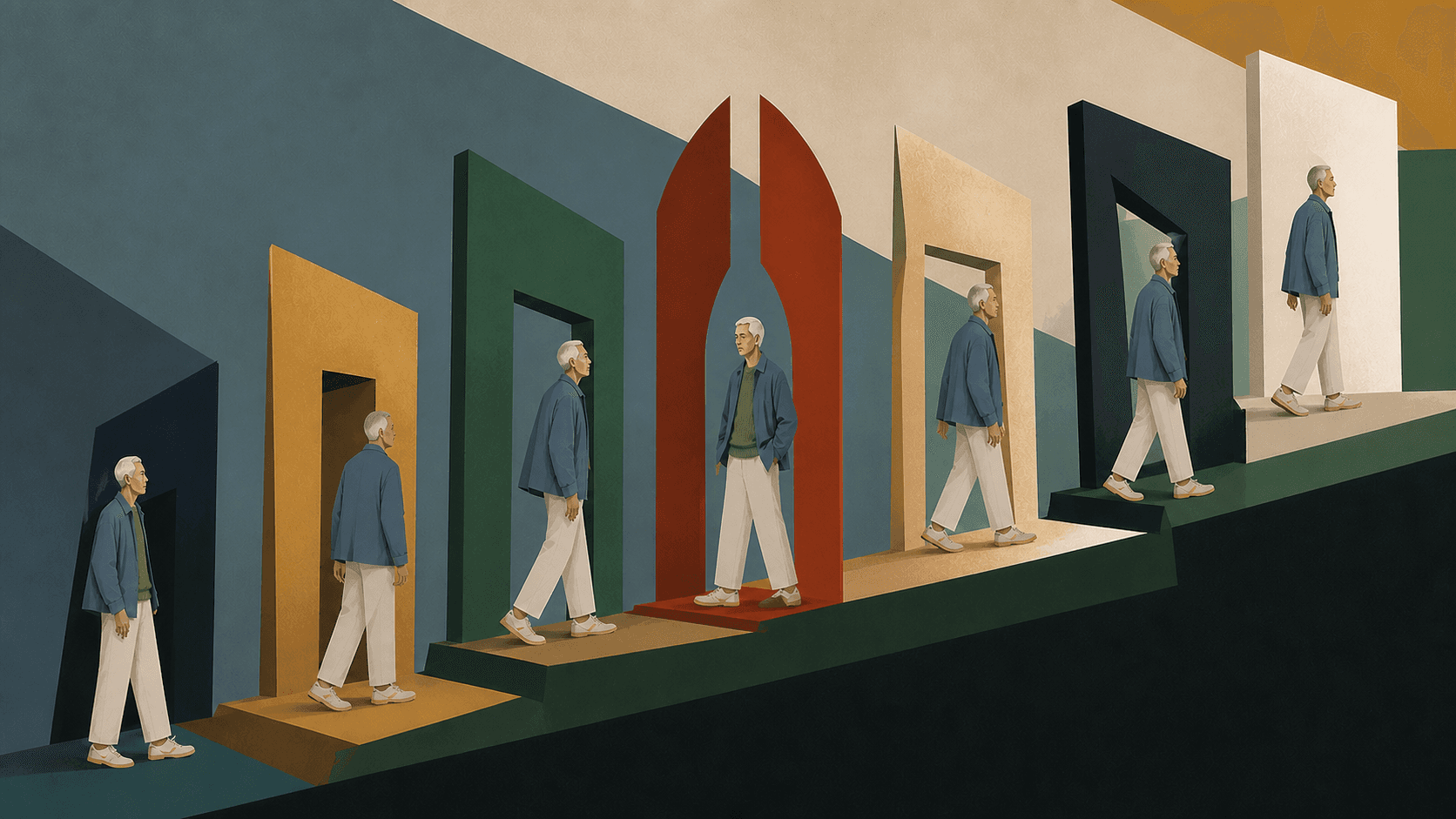
Short Story Structure: How to Plot a Complete Story
Plot a complete short story as one change under pressure. Use a flexible structure, a worked example, and a worksheet that scales from flash fiction to longer shorts.
By Elias Ward
Founding writer at Scyn

Key takeaways
- A short story is complete when one main pressure produces a meaningful change, not when a novel has been compressed.
- Five movements are enough: opening situation, disruption, escalation, decisive turn, and aftermath.
- Word-count rules vary by magazine and contest. Use percentages only as optional diagnostics.
- Three-act, Story Circle, and seven-point models can help a longer short. They become clutter in flash.
- Revise for causality, character count, setup and payoff, and an ending that shows a new state.
Scyn is built first for novelists, but short-fiction writers face the same structural question in less space: what makes the ending feel caused? The usual mistake is to import a novel outline and start deleting travel scenes. What remains is still a novel shape with the middle scooped out.
A short story does not need a world tour, a supporting cast with separate arcs, or an Act Two built to carry 40,000 words. It needs one situation that cannot stay as it is, and a final state that makes that clear.
What makes a short story complete?
Completeness is a change you can point to. A character may behave differently, a situation may become irreversible, or a revelation may change the reader's understanding of everything before it. The change can be tiny in the world and large for the person. A returned key, a refused order, a name said aloud. Spectacle is optional. Consequence is not.
That is different from a compressed novel. A novel can follow several pressures until they collide. A short story that tries to follow a war, a marriage, and a mystery will usually finish none of them. If you can remove a character or a subplot and the ending still happens, that material belonged to another draft.
Length is not a moral category. Markets disagree about where flash ends and where a short becomes a novelette. Some editors treat anything under 1,000 words as flash. Others use 1,500. A "short story" in one contest is 5,000 words; in another it is 7,500. Do not outline to a universal number. Outline to the change, then see how much room the change needs.
If you want a diagnostic after a draft exists, not a law before it does: many complete shorts spend a small opening share on the situation, the largest share on pressure and escalation, and a short final share on the new state. If your last third is still introducing people, the story has not turned.
A practical short-story structure
Use five movements. They can be five scenes, three scenes, or one scene with a turn in the middle.
Opening situation. Show the pattern the character is already living. A night desk, a route, a household rule, a job they do with their mouth closed. Specificity does the work that backstory does in a novel. The reader should be able to guess what "ordinary" costs this person.
Disruption / pressure. Something arrives that the pattern cannot absorb: a request, a deadline, a person who knows the missing name, a body in the wrong place. The disruption should touch the opening pattern, not replace the story with a new premise.
Escalation. The first response fails, or succeeds at the wrong thing. Information gets more expensive. The character's usual method creates a sharper problem. This is where shorts die when writers add a second plot instead of tightening the first.
Decisive turn or choice. The character does something the opening version of them would not have done, refuses a change and pays for the refusal, or uncovers a fact that permanently changes the meaning of the opening. A revelation can carry the turn without a later action, but it still has to alter the story rather than merely delay information.
Aftermath / new state. A brief proof. A changed habit, an empty drawer, a report filed under a different name, a walk that now stops where it used to skip. The aftermath can be a paragraph. It should not reopen the plot.
A short story can be complete with one situation, one rising pressure, and one turn that leaves a new state.
A complete original example
Sera works the lost-and-found desk at a night bus depot. For months she has kept a brass key in her drawer because the owner never came. She logs items, closes at 2 a.m., and walks home past a locked community garden.
A boy asks for "the key that opens the garden by the river," not for an item number. Depot policy sends unclaimed objects to auction on Friday. That is the disruption. The pattern (hold the object, wait, stay uninvolved) now has a clock.
Escalation is quiet and local. Sera finds a line on the original envelope asking the finder to leave the key if the owner is late. The previous clerk was the boy's mother. She died mid-shift last winter. The garden is scheduled to be cleared. Sera can follow policy and keep the desk clean, or she can leave the building with property that is not hers.
She walks him to the garden after hours. They open the shed. Seed packets inside are labeled with bus route numbers. She logs the key as returned to next of kin. The new state is a habit, not a speech: she now reads the notes before she files the objects.
There is no second viewpoint, no depot conspiracy, and no novel about the garden's founding. One pressure. One choice. One changed closing routine.
When three-act, Story Circle, and seven-point help
Larger frameworks are optional tools. They help when the short is long enough to have a real middle. They get in the way when you start inventing beats to fill a diagram.
Three-act structure still works if you let Act Two be short. Opening situation and disruption are Act One. Escalation is Act Two. Choice and aftermath are Act Three. The three-act structure template is useful when you already think in acts and need to see whether the middle is a second story. It is too much furniture for an 800-word piece.
Dan Harmon's Story Circle (you, need, go, search, find, take, return, change) scales better than a fifteen-beat film sheet because several steps can share a page. It becomes busy in flash: "go" and "search" may be the same paragraph. Use it for a longer short when you want the ending to mirror the start.
Seven-point story structure is strong when you know the last image and need the pressure that makes it necessary. Hook and Resolution still invert. You may not need two pinch points and two plot turns. A 6,000-word story can carry them. A 1,200-word story often needs Hook, one turn, one pinch, and Resolution.
Save the Cat's fifteen beats are a poor default here. They assume a feature-length middle. If you want scene-level control instead of a borrowed film grid, use the scene outline template and write one card per movement.
Browse the complete free template library when you are deciding whether the short wants a skeleton at all. Many do not. A five-node map is already a structure.
Flash fiction and longer shorts
Flash has to complete the same job with less room to recover from a false start. Open later. Cut the walk to the building. Let the aftermath be a final image instead of a scene. You can omit an on-page aftermath if the last action already is the new state: Sera writes "returned to next of kin" and the story ends on the ink.
What you cannot omit is a meaningful turn. Some flash ends on a revelation rather than a choice. That works when the revelation changes how the opening situation reads. A twist that merely withholds a fact until the last line may surprise once without making the story feel complete. On a second read, the setup should carry a different meaning.
Longer shorts can hold a delayed reveal, a second location, or one supporting character with a want. They still should not grow a subplot that needs its own resolution unless that subplot forces the main choice. If you are adding a third section because the draft feels "too small," check whether the existing turn is weak before you add population.
Novellas sit on the other side of this problem. Once you have room for two full pressures, you may want the seven-point guide or a light three-act map. That is a different article's length.
Short story plotting worksheet
Copy this and answer in sentences.
Opening situation
- Who is already in a pattern?
- What do they do every time, and what does it cost?
- What should the reader notice that the character treats as normal?
Disruption
- What request, deadline, or arrival can the pattern not absorb?
- Why does this happen now?
- What happens if they ignore it until morning?
Escalation
- How does their usual method make the problem sharper?
- What new information raises the cost?
- What option disappears?
Decisive turn
- What do they do that the opening version of them would not?
- Or: what do they refuse, and what does that refusal spend?
- Or: what revelation permanently changes the meaning of the opening?
- Who sees the choice, and who understands the revelation?
Aftermath
- What habit, object, or relationship is different?
- Which opening detail does this image answer?
- What question should remain unanswered because it belongs to another story?
Optional length check (ignore this while drafting if it makes you count instead of choose)
- Flash: can one scene hold all five movements?
- Conventional short: do you have more than one escalation beat, and do they still serve the same pressure?
- Long short: if a second thread exists, does it force the main choice?
Revision checks
Causality. Draw an arrow from each movement to the next. If you can only write "and then," the later beat is a neighbor, not a consequence. The scene connection method is the same test at novel scale.
Character count. List every named person. For each one, write the choice they force. If they force none, they are atmosphere. Atmosphere can stay unnamed.
Setup and payoff. Highlight every object, note, or rule in the opening. Each one should be used, revised, or deliberately left unused for a reason you can say aloud. An unused brass key is clutter. A key that opens the garden is structure.
Endings. The last paragraph should show a state, not announce a lesson. If you can delete the final two sentences and the change is still visible, delete them. If deleting them removes the change, the turn may not yet be dramatized.
On a Scyn canvas, make one node per movement and keep the whole story on a single screen. Color the nodes by function if you want (situation, pressure, choice), or by time of night, or not at all. Filter by chapter only if you are placing the short inside a collection. Link each node to the next with a directional arrow. When a node has no outgoing arrow, it is either the ending or a stray.