7-Point Story Structure: A Visual Guide and Template
Learn Dan Wells's 7-point story structure, from Hook to Resolution, with the backward planning order, a full worked example, and a copyable visual template.
By Elias Ward
Founding writer at Scyn
Key takeaways
- The seven points are Hook, Plot Turn 1, Pinch Point 1, Midpoint, Pinch Point 2, Plot Turn 2, and Resolution.
- Dan Wells's Hook is the protagonist's starting state, often the opposite of the Resolution, not only a sharp opening line.
- Plan in this order: Resolution, Hook, Midpoint, Plot Turn 1, Plot Turn 2, Pinch Point 1, Pinch Point 2.
- The finished story is still read in chronological order. Backwards planning is a construction method, not a reading order.
- Each point should change the next available options. Pressure and character change belong on the same chain.
The 7-point story structure is a planning order as much as a beat list. Novelist Dan Wells popularized the version writers now commonly associate with his name. Watch his lecture Seven Point Story Structure. You place the last state first, invert it to find the start, then hang the turns and pinches between those poles.
The story structure templates guide puts this method beside three-act, Save the Cat, and the Story Circle. Use that comparison when you are choosing a lens. Use this page when you are filling the seven points.
What is the 7-point story structure?
Wells's method gives you seven handles on a single causal line. It is close to three-act structure, not a replacement for it. Plot Turn 1 usually carries the story out of the opening situation. The Midpoint splits the long middle. Plot Turn 2 sets up the ending. The pinch points keep the antagonistic force on stage so Act Two does not turn into travel.
The useful nuance is the Hook. Many writers treat "hook" as the first sentence that grabs attention. In this method, the Hook is the protagonist's starting condition. If they end the story able to tell the truth in public, they begin unable or unwilling to. If a town ends free of a bad contract, it begins bound to it. The opening still needs to be readable. Its structural job is to establish the state the Resolution will invert.
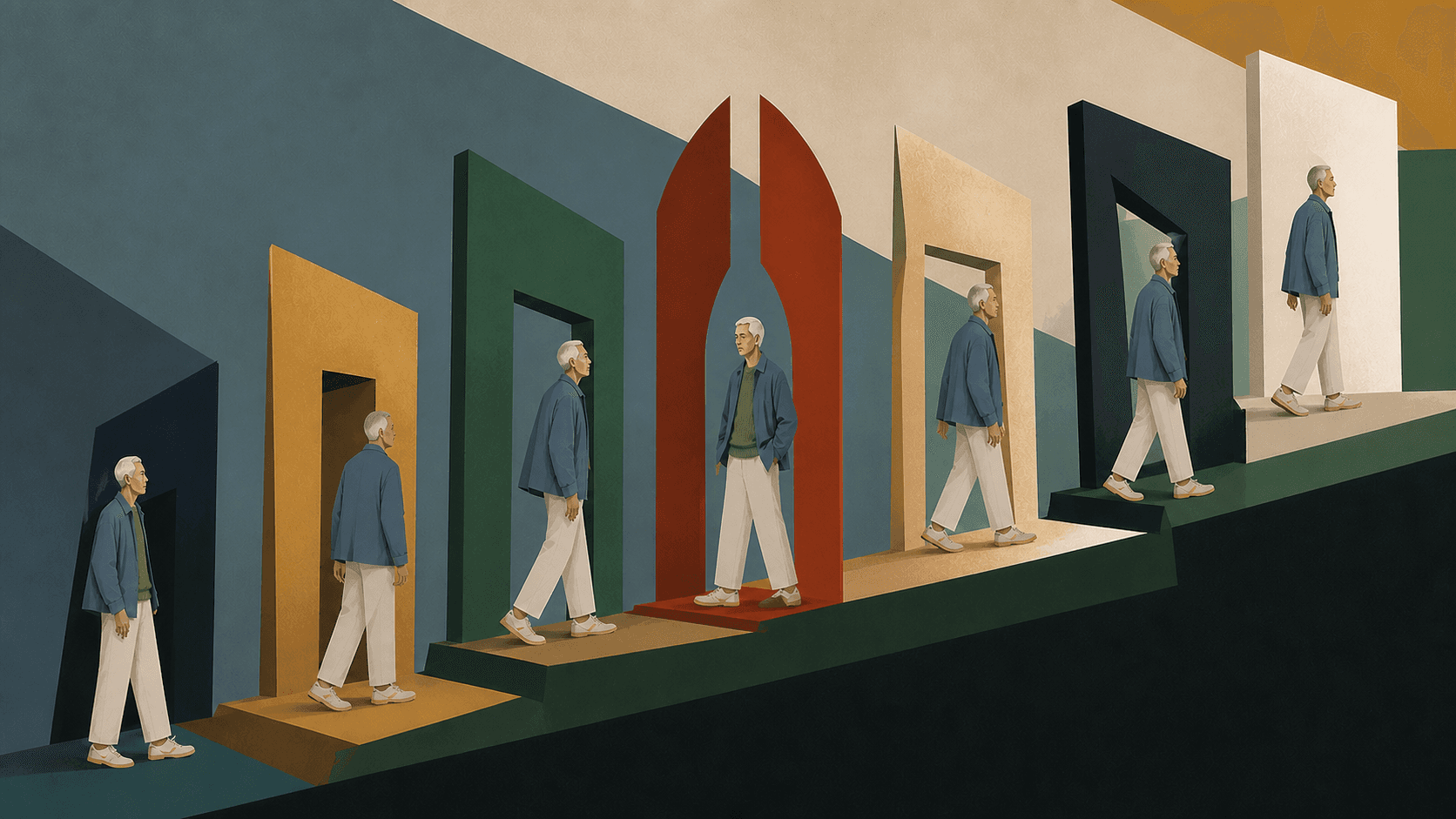
The seven points are planning handles. The story still moves in chronological order from Hook to Resolution.
The seven beats
| # | Point | Story job |
|---|---|---|
| 1 | Hook | Show the starting state, usually the opposite of the ending. |
| 2 | Plot Turn 1 | Introduce the conflict and remove the option of staying still. |
| 3 | Pinch Point 1 | Apply antagonistic pressure and prove the threat has force. |
| 4 | Midpoint | The protagonist stops only reacting and begins to act on the problem. |
| 5 | Pinch Point 2 | Crush the current plan and raise the cost of failure. |
| 6 | Plot Turn 2 | Give the protagonist the last piece they need to attempt the ending. |
| 7 | Resolution | Deliver the new state. It should answer the Hook. |
Hook. Who is this person, and what rule do they live under, before the story makes that rule expensive? Fear, isolation, complicity, and competence used in the wrong place are all valid starting states. A clever first line that does not show a state leaves you nothing to invert.
Plot Turn 1. An event makes the old life insufficient. This is close to an inciting incident or first-act break, depending on how late the character commits. The test is practical: after this point, returning to the Hook would be a different story.
Pinch Point 1. The opposition shows its strength. That can be a villain on stage, a system tightening, or a first real injury to the plan. In a survival story, a storm can fill this role when it closes an established route or destroys a resource. Incidental bad weather cannot.
Midpoint. Wells treats this as a shift from reaction to action. The protagonist starts trying to solve the story on purpose. A revelation can cause that shift. A twist that only surprises the reader, while the protagonist stays passive, is not a midpoint.
Pinch Point 2. The current plan fails. Allies vanish, the lie is exposed, the mentor is gone, the evidence is scheduled for shredding. This is the pressure that makes a half-measure look like surrender.
Plot Turn 2. The last necessary piece arrives: knowledge, an ally, a decision, a tool the earlier story made possible. Coincidence can deliver an object. It should not deliver the will to use it.
Resolution. The protagonist attempts the ending that the Hook made necessary. Victory, failure, and mixed cost are all allowed. What matters is that the final state is the Hook's opposite, or a pointed refusal of that opposite.
Plan backwards, write forwards
Wells's recommended planning order is not the order of the book:
- Resolution
- Hook
- Midpoint
- Plot Turn 1
- Plot Turn 2
- Pinch Point 1
- Pinch Point 2
Start with the ending because every earlier point exists to make that ending possible. Write the Hook as the opposite state, not as a random "before" picture. Place the Midpoint as the hinge: the moment they begin to pursue the ending instead of surviving the opening.
Then build the two turns. Plot Turn 1 is how a person in the Hook state gets pulled toward the Midpoint. Plot Turn 2 is how a person who has started to act gets what they need for the Resolution. The pinches go in the gaps those turns create. Pinch Point 1 lives between Plot Turn 1 and the Midpoint. Pinch Point 2 lives between the Midpoint and Plot Turn 2.
Readers still meet the story as Hook, turn, pinch, midpoint, pinch, turn, resolution. If you draft in the planning order, the book will feel like a pile of answers waiting for questions.
A complete original example
Iona keeps the municipal clock in a harbor town.
Resolution. She rings the tower at dawn, shows a forged shoreline survey to the crowd that the chime gathered, and the waterfront sale collapses. She keeps the job, but she now treats the tower as a public record rather than a private machine.
Hook. Iona files every irregularity as weather. She winds the clock, ignores the sealed cabinet her predecessor left, and believes the town only needs the time to be right.
Midpoint. She picks the lock, reads enough to see that the sale depends on the forged survey, and decides to prove the fraud rather than keep the clock running.
Plot Turn 1. The council votes to sell the waterfront. The buyer needs the tower "stabilized" and the sealed records transferred to their office. Silence is no longer a work habit. It is assistance.
Plot Turn 2. Iona realizes the clock can still run on the backup weights after the power is cut. She has hidden a copy of the survey in the pendulum case. She can gather witnesses at the hour the remaining records are due to be shredded.
Pinch Point 1. Surveyors padlock the cabinet. A night storm stops the clock for the first time in her tenure, and boats miss the tide window. The buyer now has a public reason to take the tower off her hands.
Pinch Point 2. The buyer cuts power and accuses Iona of theft. The council suspends her. The remaining records are scheduled for shredding at dawn.
Read in story order: Iona hides irregularities; the sale makes silence into assistance; the cabinet is padlocked and the clock stops; she reads the survey and decides to prove the fraud; she is suspended and the records are set for shredding; she finds a way to gather a crowd with the hidden copy; she rings the tower and shows the survey. The backwards pass is what kept that ending from being a speech stapled onto a tour of a clock tower.
Seven-point story structure worksheet
Copy the questions. Answer with character actions, not labels like "tension rises."
Resolution
- What is true at the end that was not true at the start?
- What did the protagonist do to make that state happen?
- What did it cost?
Hook
- What is the opposite of that ending, in concrete behavior?
- What rule are they living by?
- What would a first scene show if nobody explained the theme?
Midpoint
- When do they stop only reacting?
- What do they now know, want, or refuse?
- How does the plan change after this moment?
Plot Turn 1
- What event makes the Hook unsustainable?
- What commitment, even a reluctant one, follows?
- What option does this close?
Plot Turn 2
- What last piece makes the Resolution attempt possible?
- Where was that piece planted earlier?
- Why can they use it now, when they could not at the Midpoint?
Pinch Point 1
- How does the opposing force show its strength?
- Who is hurt, blocked, or frightened?
- Why can the protagonist not treat this as an accident?
Pinch Point 2
- What plan dies here?
- What would they lose by continuing?
- Why is retreat no longer a story you want to tell?
If two points get the same answer, delete one or change the later one. Seven empty boxes are not a plot.
Pressure, character change, and subplots
Pressure is not a volume knob. Each pinch should change the available moves. After Pinch Point 1, the old job, alliance, or hiding place should be less safe. After Pinch Point 2, the Midpoint plan should be dead. If the protagonist can keep doing the same thing with more sweat, you have intensity without causation. That is also the usual source of a sagging Act Two.
Cause and effect is the only glue the method has. Plot Turn 2 should grow from something planted before the Midpoint. The Resolution should spend a cost created by an earlier choice. "And then a worse thing happens" can fill a list. It cannot justify a point.
Character change sits on the same seven handles. The Hook and Resolution can invert a belief as well as a situation. The Midpoint is often where want and need stop being interchangeable. You do not need a second secret structure for the inner story. You need the inner turn to cause an outer action: they pick the lock, they refuse the transfer, they ring the bell.
Subplots use the same shape at a smaller scale. A second viewpoint, a romance, or an investigation can have its own hook and resolution. Keep those points on the same canvas and give them one color so you can see whether they pinch the main plot or only run beside it. If a subplot never forces a main-plot choice, it is a tour.
Common mistakes
Treating the Hook as a tagline leaves the Resolution with nothing to answer.
Using the planning order as the draft order produces reveals before setup. Readers experience chronology. You are allowed to plan from the end.
Making pinch points random misfortune hides the source of opposition. Tie each pressure beat to an established person, system, environment, or consequence so it changes the protagonist's available moves.
Placing a midpoint twist that does not change agency leaves the second half repeating the first. The character must start trying.
Letting Plot Turn 2 be a lucky break teaches the reader that the ending was not caused. The last piece can arrive from outside. The decision to use it should not.
Filling all seven points because a box is empty is how the method becomes paperwork. Merge duplicates. Split a point that is doing two jobs. Seven points are a planning frame, not a quota.
When the model fits, and when to adapt
Use it when you know the ending, or when you are willing to choose one so the middle has a destination. Mystery, thriller, adventure, and many relationship novels take the shape cleanly because opposition is already part of the premise.
Adapt it for ensembles by giving each major character a smaller-scale seven-point line that collides at shared pinches. For a tragedy, choose the damaging Resolution first and open with a contrasting state in which another outcome was still possible. Set the method aside, or use only Hook, Midpoint, and Resolution, when the story is built on contrast and connection rather than escalating opposition. Kishotenketsu and some literary shorts will fight the pinch-point language.
The three-act structure template is the easiest Scyn starting map: put the seven points on that skeleton, then add scenes only where a point does not yet cause the next one. Browse the complete free template library if you need a scene layer, a character-arc row, or a different first shape. The method is a set of questions. The canvas is there to make missing answers visible.