How to Fix Act Two: A Practical Guide for Writers
Act Two sags when the middle stops escalating. Here is how to diagnose a saggy middle, rebuild the midpoint, and make every scene raise the stakes.
By Elias Ward
Founding writer at Scyn
Key takeaways
- A saggy Act Two is almost never a "boring middle" problem. It is a causation problem: scenes happen in sequence but stop changing the situation.
- The fastest diagnosis is to check the midpoint. If nothing reframes the goal or raises the stakes around the halfway mark, the second half has nothing to escalate toward.
- Obstacles do not fix Act Two. Reversals do. An obstacle slows the protagonist down; a reversal changes what the protagonist wants or believes.
- The B story is the usual missing piece. It carries the theme and forces the internal change that the climax depends on.
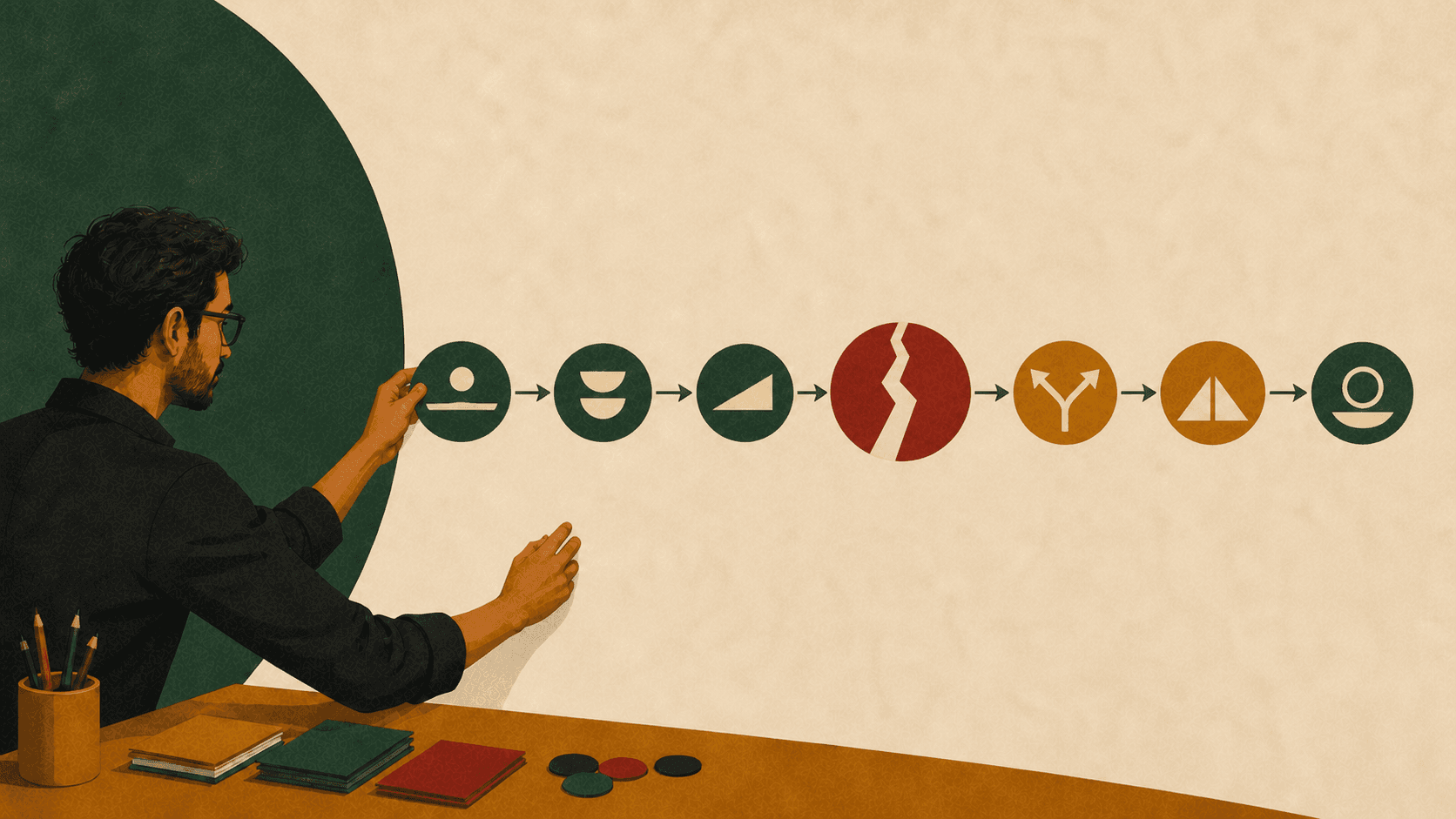
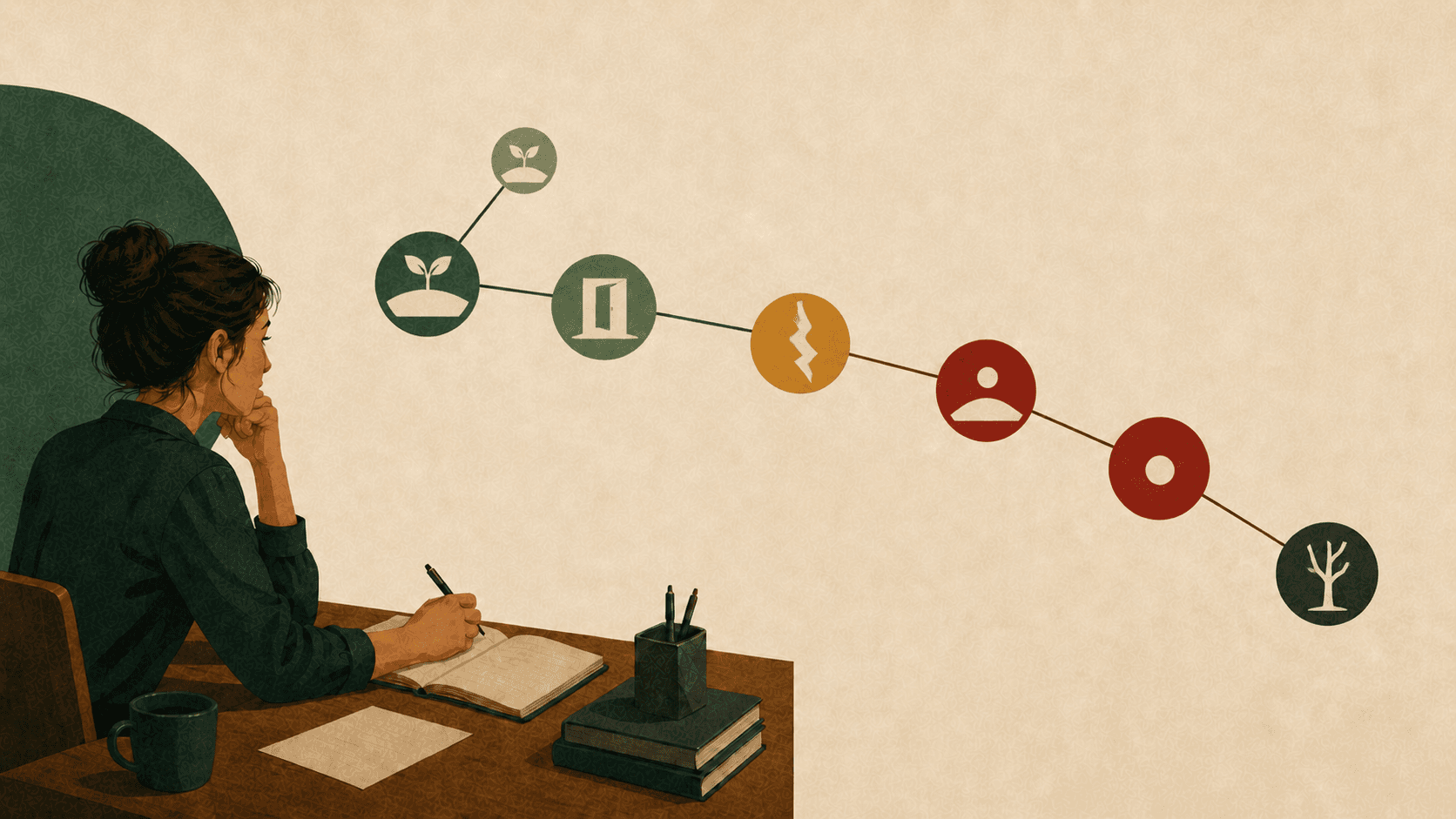
- Mapping Act Two as cause and effect, rather than a list of scenes, makes the dead stretch obvious: it is the run of nodes with no outgoing edges.
If your story drags in the middle, the problem is Act Two, and the cause is almost always the same. The scenes are still happening, but they have stopped escalating. Each one is an event rather than a consequence. This guide shows you how to find the exact point where the momentum dies, how to rebuild the midpoint so the second half has somewhere to go, and how to map the act as cause and effect so the sag becomes visible instead of vague.
Why does Act Two sag?
Act Two is the longest stretch of almost any story. In a feature screenplay it runs roughly from page 25 to page 85. In a novel it can cover half the book. The three-act structure gives you a clear job for Act One (set up the problem) and Act Three (resolve it), but it describes Act Two with one vague instruction: escalating conflict.
That vagueness is where stories break. Writers fill the space with incident. Things happen. Characters travel, argue, investigate, train, fall in love. But incident is not the same as escalation. A scene escalates only if it leaves the protagonist in a worse or more complicated position than before. When a run of scenes ends roughly where it started, the reader feels the story spinning even if every individual scene is well written.
So the real question is not "how do I make the middle more interesting?" It is "where did my story stop changing?"
If you have already drafted most of the book and cannot see the chain at all, No Plot at 60,000 Words? starts with an inventory of the scenes you already wrote.
How do you diagnose a saggy middle?
Three checks, in order.
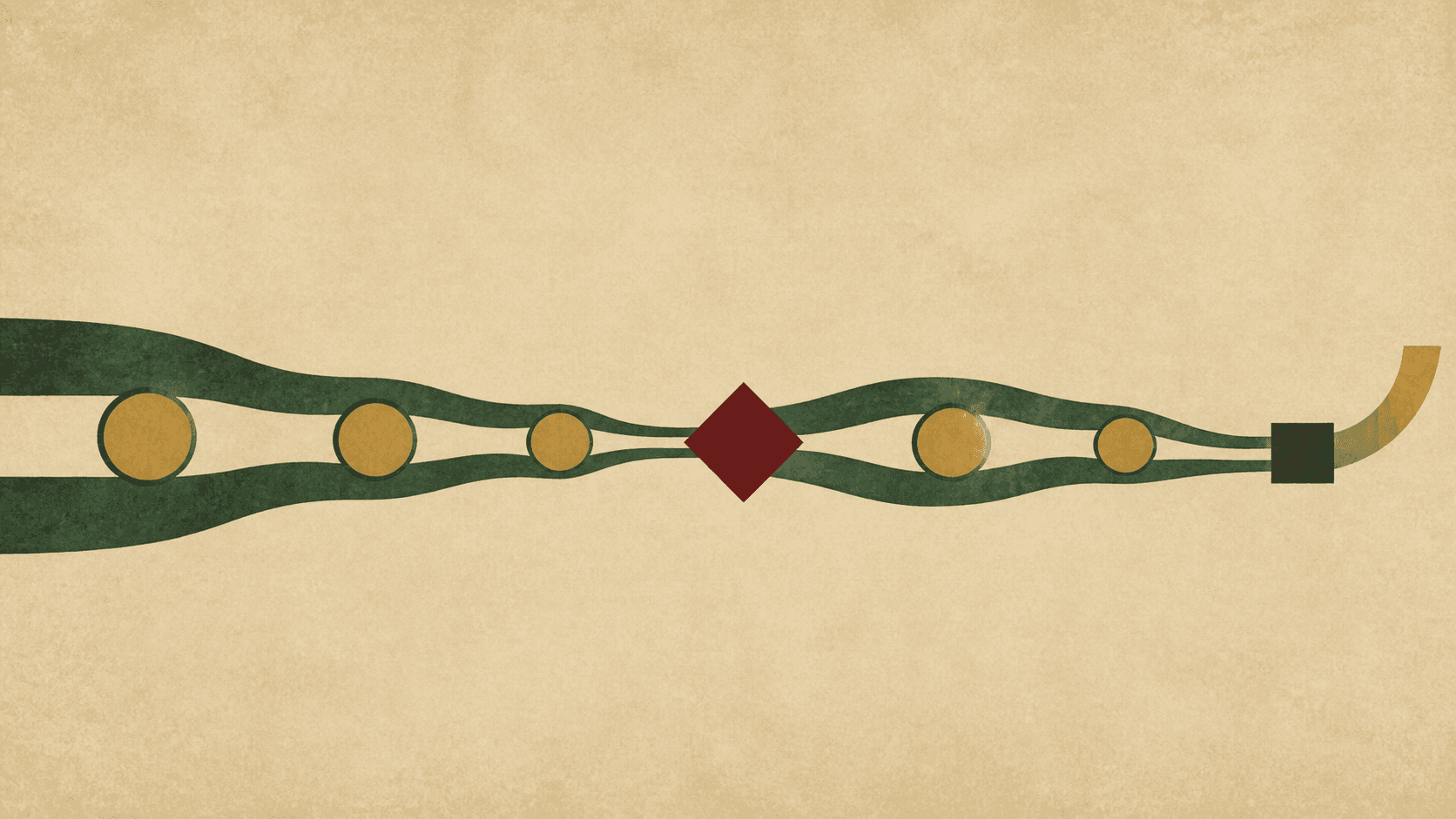
Check the midpoint first. Somewhere near the center, something should reframe the story: a false victory that turns hollow, a false defeat that clarifies the real stakes, a revelation that changes what the goal means. If you cannot point to that moment, your Act Two has no hinge. The first half builds toward nothing and the second half escalates from nothing.
Check each scene for change. Go scene by scene and ask one question: what is different at the end of this scene compared to the start? If the answer is "the characters know each other a little better" or "we learned some backstory," that scene is probably part of the sag. A working scene changes a value: safe becomes threatened, allies become suspects, hope becomes doubt.
Check the chain, not the list. This is the one most writers skip. An outline is a list, and lists hide causation. Two scenes can sit next to each other on a list while having no causal relationship at all. The sag is the stretch where scenes are adjacent but not connected. One event does not cause the next; it just follows it.
How do you fix Act Two, step by step?
Rebuild the midpoint
Start here, because everything downstream depends on it. A strong midpoint does one of two things: it raises the stakes (the cost of failure gets bigger) or it changes the goal (the protagonist learns the thing they wanted is not the thing they need). The Save the Cat beat sheet calls this the false victory or false defeat, and it sits dead center for a reason. If you fix nothing else, fix this. A real midpoint gives the back half of the act a direction to escalate in.
Turn obstacles into reversals
Most saggy middles are full of obstacles and empty of reversals. An obstacle is external and temporary: a locked door, a missing clue, a delayed train. The protagonist works around it and continues toward the same goal in the same emotional state. A reversal changes the protagonist's situation or belief: the ally was lying, the plan made things worse, the win cost more than it was worth. Replace two or three obstacles with reversals and the act stops feeling like a holding pattern.
Use the B story to carry the theme
If Act Two feels thin, the missing piece is usually the B story: the relationship or subplot that carries the theme. The B story is where the protagonist is challenged on what they believe, not just on what they want. It is also what makes the climax possible, because the internal change that lets the protagonist win in Act Three is set up in the Act Two B story. If your middle has only one thread, that is your sag. Add the second.
Make every scene pay a price
By the second half of Act Two, progress should cost something. The "bad guys close in" stretch is not a metaphor; it is a structural instruction. Each win should create a new problem, and each loss should narrow the protagonist's options, until they reach the low point with almost nothing left. If your protagonist arrives at the end of Act Two in roughly the same shape they were in at the midpoint, the act has not done its job.
What if Act Two is too short or too long?
A too-short Act Two usually means the protagonist solved the problem too easily. The fix is not padding; it is raising the cost. Make the obvious solution fail, and make the failure teach them something.
A too-long Act Two usually means you have obstacles standing in for reversals. The fix is not cutting scenes at random; it is finding the stretch where the situation stops changing and collapsing it. Two scenes that make the same point become one scene that makes it harder.
In both cases, the length is a symptom. Causation is the disease.
How do you map Act Two as cause and effect?
This is where a visual map earns its place. Lay your scenes out as nodes and connect them with edges that mean "this causes that." The saggy stretch is immediately visible: it is the run of nodes with no outgoing edges, or the cluster that loops back on itself without moving forward. You stop arguing with yourself about whether the middle "feels" slow and start seeing exactly which scenes fail to drive the next one.
Scyn's three-act structure template gives you the spine to start from, and the Save the Cat beat sheet template breaks the act into the six sections that each have a different job. If you want to work at the scene level, the scene card template lets you record each scene goal, conflict, and outcome, then connect cards so a dead scene shows up as a card with nothing flowing out of it.
For the bigger picture on why structure works better as a map than a list, visual plot mapping for writers covers the underlying idea, and story structure templates every writer should know puts the three-act framework next to the alternatives.
If the middle gets worse because the protagonist keeps choosing a destructive belief, use the negative character arc guide to map the reward and cost of each decision. If the problem is a loose chain of events, the Pixar story structure guide uses repeated consequences to rebuild causality.
Act Two does not need more events. It needs every event to matter to the next one. Find the place where that chain breaks, rebuild the midpoint, trade obstacles for reversals, and the middle stops sagging because it finally has somewhere to go.
Related reading
- Save the Cat Beat Sheet: All 15 Beats Explained
- Story Structure Templates Every Writer Should Know
- How to Write a Negative Character Arc
- Pixar Story Structure: Story Spine, Theme and Three Acts
- How to Outline a Novel: A Practical Guide
- Visual Plot Mapping for Writers
- No Plot at 60,000 Words? How to Rescue Your Draft