How to Outline a Novel: A Practical Guide
The outlining methods working novelists actually use, a template you can start today, the mistakes to avoid, and how to pick the right tool.
By Elias Ward
Founding writer at Scyn
Key takeaways
- Every novel outline needs three things before you start: a protagonist with a problem, stakes that matter, and a sense of the ending.
- The five major outlining methods (three-act, Snowflake, Save the Cat, Hero's Journey, and scene-by-scene) suit different types of stories and writers.
- Most outlining failures come from skipping the middle, outlining plot without character motivation, or treating the outline as sacred instead of flexible.
- A five-beat skeleton (hook, catalyst, midpoint shift, crisis, resolution) is the minimum viable outline for any novel.
- Visual mapping tools reveal structural problems that linear outlines hide, especially cause-and-effect gaps and dangling subplots.
You have an idea for a novel. Maybe it is a character who will not leave you alone, a world you want to explore, or a plot twist that hit you in the shower. The temptation is to open a blank document and start writing chapter one. Some writers do exactly that, and some of them finish books. But most who skip outlining end up stuck around the 20,000-word mark, staring at a draft that has three promising beginnings and no middle.
Outlining is not about killing spontaneity. It is about solving structural problems before you have invested months of writing time in them. A good outline lets you see the shape of your entire novel before you commit to the prose. It makes the difference between a first draft that needs revision and a first draft that needs demolition.
What follows is the stuff that actually matters: the outlining methods that working novelists use, a template you can start with today, and the mistakes that keep showing up in draft after broken draft.
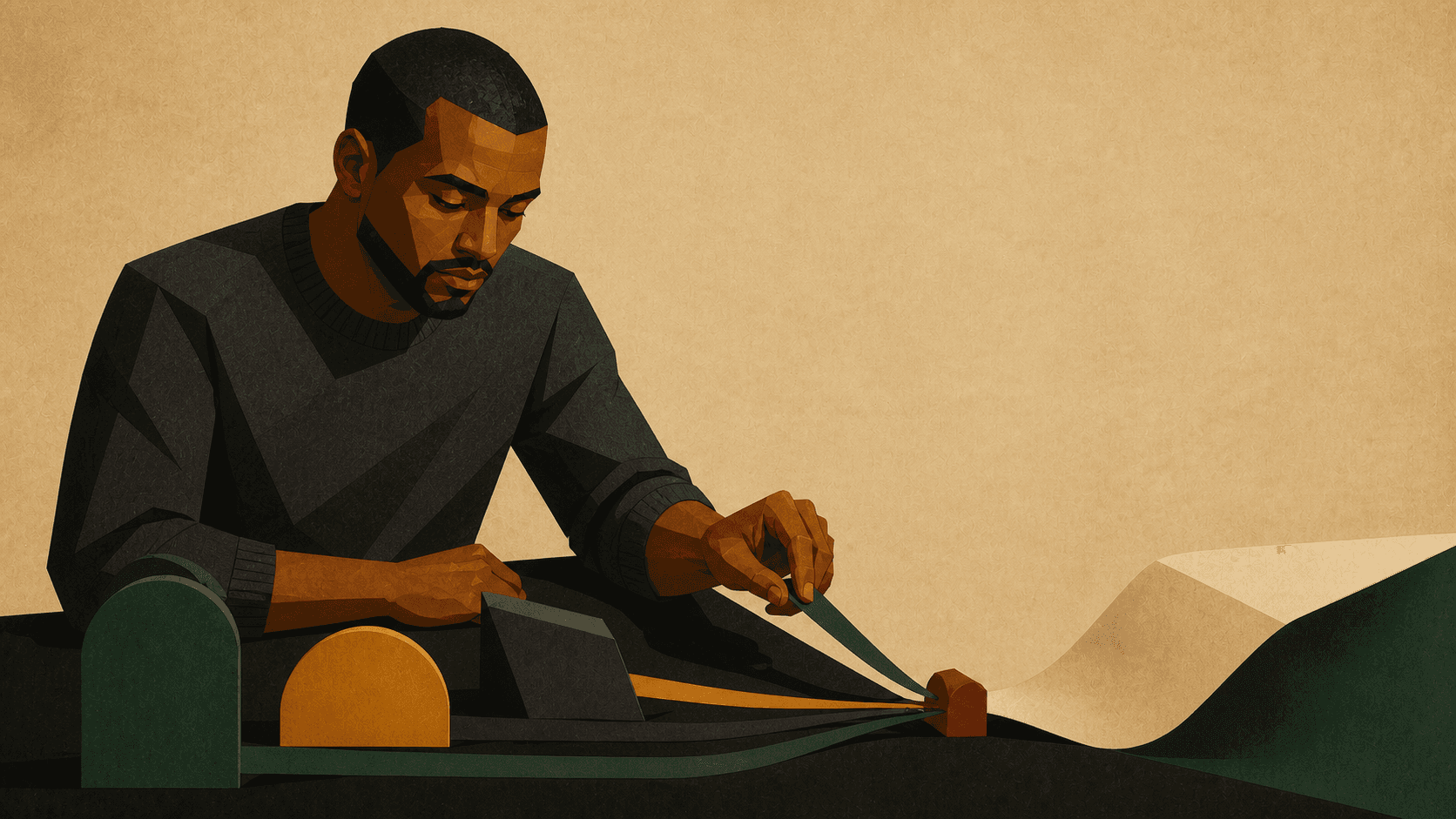 A novel outline as connected story threads. Each line carries a sequence of beats or scenes into the moments where they change one another.
What do you need before you start outlining?
Before you touch any outlining method or template, you need three foundational pieces. Without them, every outline you build will be a house on sand. You need a protagonist who wants something and cannot get it easily. A character you merely find interesting will not carry a plot. You need stakes that matter if they fail, personal or large-scale, real enough to carry 80,000 words. And you need a sense of the ending: whether they succeed, at what cost, and how they differ from the person who started. You do not need every scene. You do need conflict and a destination, or the outline will wander no matter how tidy the beats look. If any of the three is missing, stop and fix that first. A perfectly structured outline around a protagonist with no real problem is still a bad outline. Methods and templates come after these pieces exist.
A protagonist with a problem. Not just a character you find interesting, but a character who wants something and cannot easily get it. "A marine biologist who discovers an underwater civilization" is a premise. "A marine biologist who must negotiate peace between an underwater civilization and a government that wants to weaponize their technology" is the start of a story. The difference is conflict.
Stakes that matter. What happens if your protagonist fails? If the answer is "nothing much," your novel does not have enough tension to sustain 80,000 words. The stakes can be personal (a relationship, a career, a sense of identity) or global (the fate of a kingdom, the survival of a species), but they must be real and escalating.
A sense of the ending. You do not need every detail. But you need to know, at least roughly, where the story lands. Does the protagonist succeed? At what cost? How are they different at the end than at the beginning? Writers who cannot answer these questions tend to write novels that wander. Knowing your ending does not prevent surprise. It prevents aimlessness.
If you are missing any of these three pieces, work on them before you outline. A perfectly structured outline built around a protagonist with no real problem is still a bad outline.
What are the major novel outlining methods?
No single outlining method works for every writer or every book. The five approaches below are the ones that working novelists actually use, with honest assessments of where each one shines and where it breaks down. Three-act structure is the default map of setup, confrontation, and resolution, and it leaves a long vague middle. The Snowflake Method starts with one sentence and expands in layers, which helps if a blank page freezes you and can feel mechanical if your best ideas arrive late. Save the Cat gives you fifteen named beats that make outlining concrete and can push a book toward formula if you treat them as law. The Hero's Journey fits quests and coming-of-age stories and sits badly on quiet character studies. A scene-by-scene list is the most writable outline and the easiest way to spend your drafting energy before you draft. Pick the method that matches the book, not the one with the most diagrams.
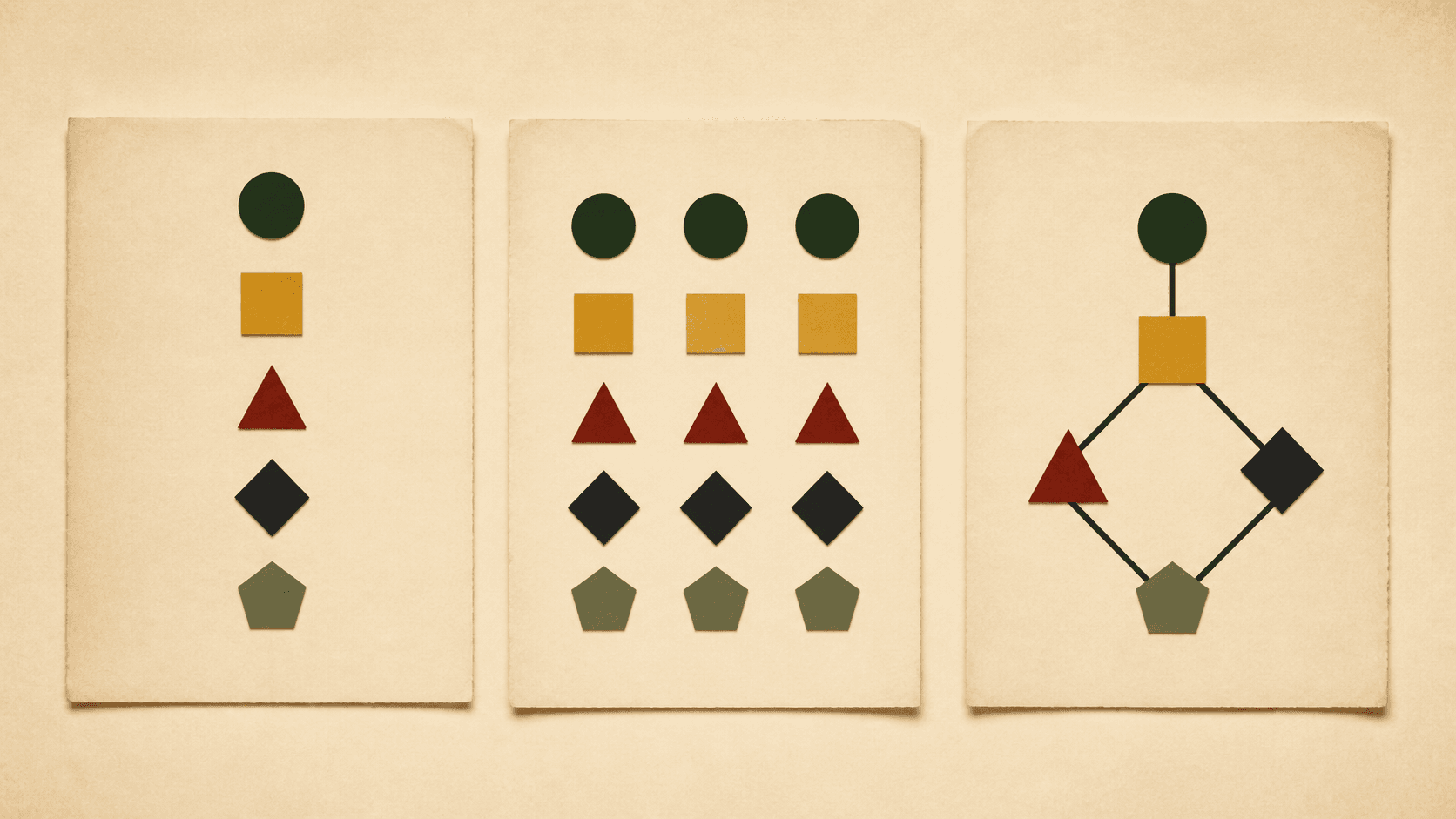 Three outlining approaches: sequential list (left), structured grid (center), and networked map (right). Each reveals different things about your story.
Three-Act Structure
The most widely known framework, and for good reason. It maps onto how audiences naturally process stories.
Act One (roughly the first quarter of your novel): Establish the protagonist, their ordinary world, and the status quo. Then break it. An inciting incident forces the protagonist into action. By the end of Act One, they have committed to a path that will carry them through the rest of the story.
Act Two (the middle half): The protagonist pursues their goal against escalating obstacles. A midpoint event around the halfway mark raises the stakes or shifts the dynamic. Things get progressively worse until the "dark night of the soul" near the end of Act Two, where the protagonist's plan has failed and the situation seems hopeless.
Act Three (the final quarter): The protagonist regroups, confronts the central conflict one last time, and either succeeds or fails. Subplots resolve. A new equilibrium is established.
Three-act structure is a solid default. Its weakness is that Act Two is enormous and vague. "Escalating obstacles" is not actionable advice when you are staring at 40,000 words of unwritten middle. That is why more detailed methods exist.
For a deeper look at this and other structural frameworks, see the story structure templates guide.
The Snowflake Method
Developed by Randy Ingermanson, the Snowflake Method starts simple and adds complexity in layers. It is named after the mathematical concept of a fractal snowflake, where a simple shape becomes intricate through repeated expansion.
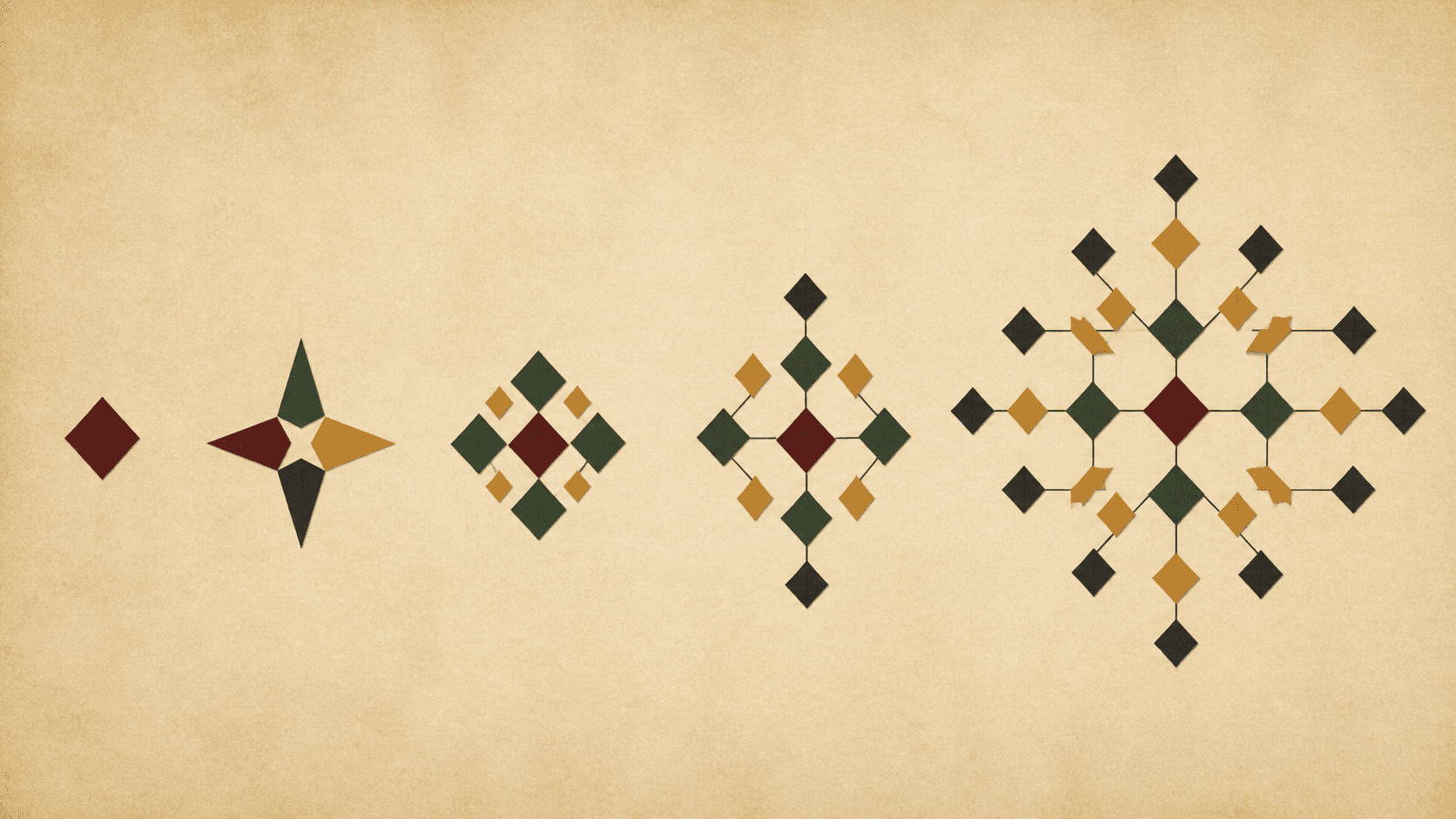 The Snowflake Method: start with one sentence, expand to a paragraph, expand to a page, expand to character sheets, expand to a full scene list. Each layer adds detail to the previous one.
The process works like this. You start with your entire novel compressed into a single sentence of fifteen words or fewer. Then you expand that sentence into a paragraph covering setup, three turning points, and the ending. Five sentences, roughly.
From there, you write a one-page summary for each major character: their storyline in one sentence, their motivation, their goal, their conflict, and how they change. Then you take each sentence from your story paragraph and expand it into its own paragraph. Then you expand each character summary into a full-page synopsis from that character's perspective.
You keep going. Each paragraph of your synopsis becomes a full page. Each character gets a detailed chart. Eventually you produce a scene list from your expanded synopsis. Eight steps total, each one building on the last.
The Snowflake Method works well for writers who feel overwhelmed by the blank page. Each step is small and manageable. It also catches structural problems early, because if your one-sentence summary is weak, you know before you have invested weeks of work.
The downside: it is methodical to the point of feeling mechanical for some writers. The layered expansion can feel repetitive, and you may discover that your best ideas come during steps six and seven, making the earlier steps feel like busywork in retrospect.
Save the Cat for Novels
Blake Snyder's Save the Cat beat sheet was originally designed for screenplays, but novelists have adopted it because its fifteen beats map cleanly onto novel structure. Jessica Brody adapted it specifically for novels in Save the Cat! Writes a Novel.
The beats:
- Opening Image - a snapshot of the protagonist's world before the story
- Theme Stated - a hint at the story's thematic argument
- Setup - establish the protagonist's life, flaws, and "things that need fixing"
- Catalyst - the inciting incident
- Debate - the protagonist resists or deliberates
- Break Into Two - the protagonist commits and enters a new situation
- B Story - a secondary story (often a relationship) that carries the theme
- Fun and Games - the promise of the premise delivered on
- Midpoint - stakes raise; false victory or false defeat
- Bad Guys Close In - external pressures and internal doubts escalate
- All Is Lost - the worst moment
- Dark Night of the Soul - the protagonist processes the loss
- Break Into Three - a new idea or piece of information sparks the solution
- Finale - the protagonist enacts a new plan and confronts the conflict
- Final Image - mirrors the opening image, showing how things have changed
Save the Cat is prescriptive, and that is both its strength and weakness. It gives you a specific beat at every stage, which makes outlining feel concrete. But it can lead to formulaic stories if you follow it too rigidly. Treat the beats as checkpoints, not commandments.
For a detailed breakdown with examples, see Save the Cat Beat Sheet for Screenwriters, which covers the same framework from a screenwriting angle. If you are outlining a screenplay rather than a novel, the screenplay outlining guide covers format-specific concerns like page counts and beat timing.
The Hero's Journey
Joseph Campbell's monomyth, adapted for working writers by Christopher Vogler. Twelve stages that trace a protagonist's departure from the ordinary world, descent into an unknown world, and return transformed.
This works brilliantly for quest narratives, coming-of-age stories, and fantasy. It works poorly for character studies, ensemble casts, and stories where the protagonist's refusal to change is the point. Do not force it. If your novel is a quiet domestic drama, the Hero's Journey will make it feel like something it is not.
For the full twelve-stage breakdown, see the Hero's Journey template guide.
Scene-by-Scene Outline
Skip the high-level frameworks entirely and go straight to a list of scenes. For each scene, note:
- POV character (if you have multiple)
- Where and when it takes place
- What the character wants in this scene
- What stands in their way
- What changes by the end of the scene
- What the reader learns that they did not know before
This is the most granular approach, and it produces the most "writable" outline. When you sit down to draft, you know exactly what every scene needs to accomplish. The risk is that you spend so long outlining at this level of detail that you drain the creative energy you need for the actual prose.
A good compromise: use a high-level framework (three-act, Save the Cat) for your structural skeleton, then develop scene-by-scene notes only for the sections where you feel uncertain.
Which outlining method works for which kind of novel?
Not every method suits every kind of book.
If you are writing a tightly plotted thriller or mystery where the reader needs to receive information in a precise order, Save the Cat or a scene-by-scene outline will serve you best. These genres punish structural looseness. If a clue shows up in the wrong place or a reveal happens too early, the whole mechanism breaks.
If you are writing literary fiction or a character-driven story where the plot emerges from who the characters are rather than from external events, the Snowflake Method's emphasis on character summaries before scene planning makes more sense. You need to know the people before you can know the plot.
For epic fantasy, science fiction, or anything with world-building and multiple POV characters, you probably need a combination. A high-level structural framework for the overall arc, character synopses for each POV thread, and a visual map to track where the threads intersect. This is where list-based outlines start to fail, because you are not managing one storyline. You are managing several, and they all need to affect each other at specific moments.
If you are writing a multi-POV novel specifically, the guide to mapping multi-POV novels covers how to keep parallel timelines from collapsing into chaos.
For a first novel, start with the five-beat skeleton and three-act structure. They are the most forgiving. You can always add more detail later. You cannot easily un-outline a 60-page scene-by-scene plan that is no longer working.
What is the difference between plotting and pantsing?
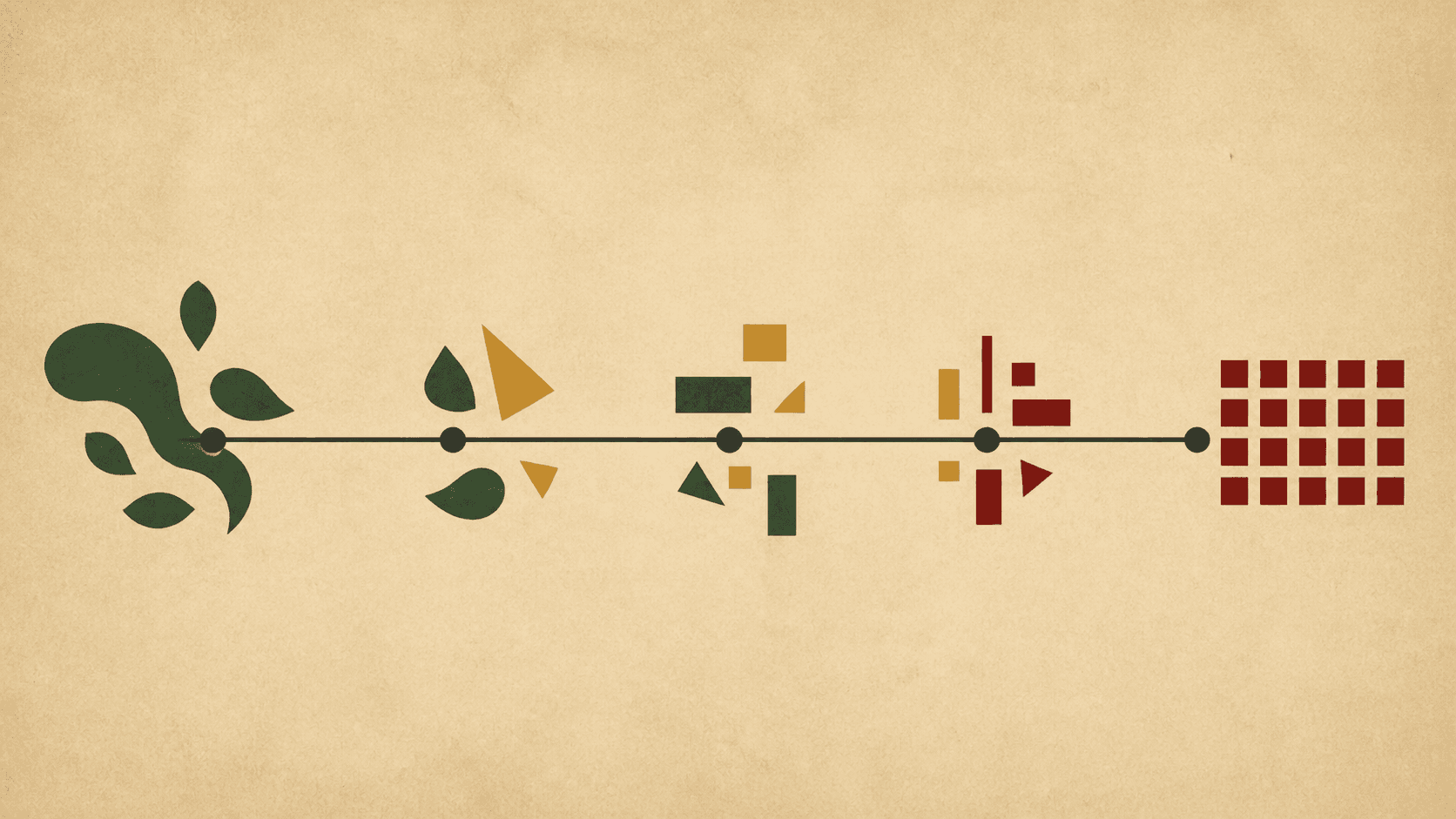 The outlining spectrum. On one end, discovery writers who follow intuition. On the other, detailed outliners who plan every scene. Most working novelists land somewhere in the middle.
The writing internet loves this debate. "Pantsers" write by the seat of their pants, discovering the story as they go. "Plotters" outline extensively before drafting. The reality is that almost nobody sits at either extreme, and the writers who insist they do are usually describing an idealized version of their process rather than how they actually work. Even instinctive drafters think the story through first. That thinking is outlining, on paper or only in your head. Careful outliners still leave the plan when a better idea shows up in the scene. What you need is the least structure that keeps you moving without getting lost. A one-page synopsis is enough for some people. Others want a sixty-page scene list. Neither is wrong. If you are new to this, start with more structure than you think you need. You can always leave the plan. Finding your way back from 30,000 undirected words is much harder.
Stephen King has written extensively about craft in On Writing, but even the most intuitive writers spend time thinking through stories before they draft. That thinking is outlining. It just happens in the head rather than on paper. On the other end, even the most meticulous outliners deviate from their plans when a better idea shows up during drafting. The plan says the detective goes to the warehouse. But you are writing the scene and realize it works better at the suspect's house. You follow the better idea. That is not a failure of outlining. That is outlining doing its job: giving you something to push against.
What matters is finding the minimum amount of structure you need to keep moving forward without getting lost. For some writers, that is a one-page synopsis. For others, it is a sixty-page scene-by-scene breakdown. Neither is wrong.
If you are new to outlining, start with more structure than you think you need. You can always deviate from the plan. It is much harder to find your way back from 30,000 words of undirected prose.
How do you outline without feeling trapped?
Treat the outline as your current best guess, not a promise you made to your past self. Keep a few things fixed: the protagonist, the central problem, the midpoint change, the crisis, and the ending. Everything between those anchors is a route you can redraw. If drafting shows the detective should visit the suspect's house instead of the warehouse, change the outline. It already showed you what that change touches. Plan the next two or three chapters closely enough to write them. Leave later sections at beat level until you get nearer. A sixty-scene plan feels safe, but half of that detail is about characters you have not lived with yet. Leave holes visible. A beat labeled "How does Mara get the key?" beats a fake scene invented to make the map look finished. Review after a chapter or an act, not after every surprising sentence.
Start by separating decisions from possibilities. Your protagonist, central problem, midpoint change, crisis, and ending are the anchor points. Everything between them is a route you are allowed to redraw. If drafting reveals that the detective should visit the suspect's house instead of the warehouse, change the outline. It has done its job by showing you what that change affects.
Detail also has an expiry date. Plan the next two or three chapters closely enough to write them. Keep later sections at beat level until you get nearer. A sixty-scene plan can feel reassuring, but half of its detail will be based on characters you have not spent time with yet.
Leave uncertainties visible. A node called "How does Mara get the key?" is more honest and more useful than a weak scene invented to make the outline look finished. In Scyn, you can give uncertain beats one colour, connect the possible routes, and replace them when the answer arrives. The graph is working material. It does not need to look tidy.
Review the outline at natural breaks, usually after a chapter or act, rather than after every surprising sentence. Constantly switching between drafting and replanning can become its own form of avoidance.
All of this is for planning flexibly before you draft. If the draft has already left the plan, you have a different job. Your protagonist refused the betrayal in chapter eleven, and chapters twelve to twenty now describe a story that no longer exists. Do not re-outline the whole book from there. Draft stopped following your outline? Revise or keep writing gives the decision procedure: name the divergence, test whether the draft earned it, list what it breaks, and re-plan only the next act.
A step-by-step novel outline template
This template borrows from several methods. It takes about a day to complete and gives you enough structure to write from without strangling the draft. You fill one page: a one-sentence premise with protagonist, problem, and stakes; a rough ending and its cost; five anchor beats (hook, catalyst, midpoint change, crisis, resolution); how the protagonist's belief changes; a short paragraph per act; scene notes only where you feel shaky; and questions you are leaving open on purpose. That is enough to start a draft. It is not a sixty-page scene bible. First novels do well at this level because you can add detail later, and you cannot easily unwrite a huge plan that has already gone stale. Work the steps below in order. If a step is still vague, stay there. Do not skip ahead to a scene list to feel productive. This template ships as an interactive novel outline template you can open and fill on a canvas, and as a printable PDF on that page.
Start one page with these labels:
- Premise: protagonist, central problem, and stakes in one sentence
- Ending: the final choice and its cost
- Five anchor beats: hook, catalyst, midpoint change, crisis, resolution
- Character change: what the protagonist believes at the start and understands at the end
- Act summaries: what each section changes
- Scene notes: goal, pressure, outcome, and the next scene it causes
- Open questions: gaps you have deliberately left unresolved
The steps below show how to fill it in.
Step 1: The One-Sentence Premise
Write your novel's premise in one sentence. Include the protagonist, the conflict, and the stakes.
Example: A burned-out teacher discovers she can hear her students' thoughts, forcing her to confront the gap between who she pretends to be and who she actually is, or risk losing the one student who sees through her.
Step 2: The Five-Beat Skeleton
Identify five key moments and write them down before you invent any chapter list. The hook is the opening situation that makes a reader stay. The catalyst is the event that breaks the protagonist's ordinary world. The midpoint shift is the halfway turn that changes what the story costs, or what it is actually about. The crisis is the worst moment, the point of no return. The resolution is how it ends, including the price. If you can name those five and say why each one follows from the last, you have the skeleton of the novel. Everything else is connective tissue. Writers who skip this step often hold a vivid opening and a wished-for ending with nothing load-bearing between them. Fill these five first. If one beat is still a shrug, sit with that beat before you build a sixty-scene plan around a hole.
- The Hook - What is the opening situation that draws the reader in?
- The Catalyst - What event disrupts the protagonist's world?
- The Midpoint Shift - What happens halfway through that changes everything?
- The Crisis - What is the worst moment, the point of no return?
- The Resolution - How does it end?
If you can articulate these five beats, you have the skeleton of your novel. Everything else is connective tissue.
Step 3: Character Arcs
For your protagonist and each major character, answer:
- What do they want at the beginning?
- What do they actually need (which may be different from what they want)?
- What is preventing them from getting either?
- How do they change by the end?
That gap between want and need is where interesting characters come from. A character who wants to win the competition but needs to learn that winning is not the point will generate conflict all on their own, because the thing they are chasing is the wrong thing.
Step 4: Act-Level Breakdown
Divide your story into three or four acts (some novelists prefer four acts, splitting the long middle into two distinct movements). For each act, write a paragraph describing what happens, what changes, and what the protagonist's emotional state is at the end.
This is where you catch the biggest structural problems. If your Act Two paragraph is vague or sounds like "stuff happens and tension builds," stop. This is the part that needs the most thought, and vagueness here will cost you months of lost drafting time.
Step 5: Scene List
For sections where you feel confident, a brief note per scene is enough: "Marcus confronts Elena about the missing research. She deflects. He leaves more suspicious than before."
For sections where you feel uncertain, add more detail. What is the conflict? How does the scene end differently than it begins? What is the reader supposed to feel?
You do not need to complete the scene list in one sitting. Some writers fill in scenes as they draft, outlining two or three chapters ahead of wherever they are writing.
If several plotlines have to share that scene list, the worked plot outline example shows how to merge a main plot, character arc, and two subplots without dropping one.
What are the most common outlining mistakes?
The same mistakes keep showing up. They do not care what genre you write in. People outline events without character motive, wave at the middle while polishing the opening and the ending, add subplots because the map looks thin, treat the plan as a contract, swear off outlining after one rigid method went dead, or keep the outline open so they never have to write. An outline full of incidents and empty of why anyone cares will draft like a summary. If Act Two is shorter than Act One on the page, reverse that. Fewer elements doing more work beats a busy map. If a better idea arrives in the scene, follow it. If a five-beat skeleton still leaves room to discover, try that before you decide outlining is the enemy. When you catch yourself color-coding the same arcs for the third time, close the outline and open the manuscript.
Outlining plot but not character. You know what happens, but not why anyone cares. An outline full of events but empty of character motivation will produce a draft that reads like a summary. For every plot point, ask: why does this matter to the person it is happening to?
Skipping the middle. Writers tend to have a vivid opening and a satisfying ending in mind, then gesture vaguely at the 50,000 words between them. The middle is where novels live or die. If your outline for Act Two is shorter than your outline for Act One, reverse that.
Confusing complexity with depth. Adding more subplots, more characters, and more twists does not make a story deeper. It makes it busier. A strong outline often has fewer elements than you expect, each doing more work.
Treating the outline as sacred. An outline is a plan, not a contract. If you discover something better while drafting, follow it. The outline exists to prevent aimless wandering, not to prevent good ideas.
Never outlining at all because you tried it once and it "killed your creativity." This is usually a sign that you used too rigid a method, not that outlining itself is the problem. Try a lighter-touch approach. A five-beat skeleton is still an outline, and it leaves enormous room for discovery.
Outlining to avoid writing. At some point, the outline is done and you are just procrastinating. You will know because you start doing things like color-coding character arcs for the third time or rearranging scenes that were already in the right order. Close the outline. Open the manuscript. Write.
What tools work best for outlining a novel?
The right tool depends on how your brain works, not on which app has the longest feature list. Index cards and whiteboards help if you think in space, and they fall apart once sixty cards need rearranging and you cannot see what connects to what. Word, Google Docs, and Scrivener's outliner are fine for a sequential list. They hide the links between threads because everything reads top to bottom. Spreadsheets work for scene-by-scene work with several POV columns, and they can make the job feel like bookkeeping. Visual maps put events on a canvas and make the connections explicit, which is how you spot a subplot that never pays off. If your outline keeps hiding problems that only show up in draft, try a map before you buy another feature. No tool invents the story for you. It only shows the structure you already have, or the holes in it.
Physical tools (index cards, whiteboards, sticky notes) work well for writers who think spatially. The limitation is that they do not scale. Once you have sixty cards on a wall, rearranging them and tracking the connections between them becomes unwieldy.
Word processors and documents (Google Docs, Word, Scrivener's outliner) are fine for sequential, list-based outlines. They are familiar and require no learning curve. But they obscure the connections between story elements. Everything is linear, and stories are not linear.
Spreadsheets work surprisingly well for scene-by-scene outlines, especially if you have multiple POV characters and need to track timelines. Columns for scene number, POV, location, conflict, and resolution. But spreadsheets are sterile, and working in one can make outlining feel like accounting.
Visual mapping tools let you lay out your story as a network of connected events rather than a sequential list. This approach reveals structural patterns that are invisible in a document: dangling subplots, cause-and-effect gaps, pacing imbalances, and redundant scenes. Scyn's feature set is built around this idea.
A visual novel outlining tool was built specifically for this kind of work. Story events are nodes on a canvas, connections between them are explicit and editable, and the whole tool is designed around how writers think about narrative structure rather than how project managers think about workflows. If your outline keeps revealing problems you cannot see in a list format, a visual approach is worth trying.
For a deeper look at why spatial layout catches problems that linear outlines miss, see Visual Plot Mapping for Writers. If you are comparing tools, the Scyn vs Plottr comparison covers the timeline-versus-map trade-off, and Scyn vs Scrivener covers where a dedicated plotting tool fits alongside a full writing environment.
When should you stop outlining and start drafting?
A reliable test: can you describe what happens in every major section of your novel, from the inciting incident through the climax, and explain why each section follows from the previous one? If yes, you have enough structure. You do not need every scene. You need the chain of cause and effect. Another signal is impatience. You want to write the scenes instead of describing them. That restlessness is drafting energy, and it goes stale if you keep adding color codes. Stop when the five anchor beats are named, the middle has actual turns, and you can say what the protagonist believes at the start and understands at the end. Keep going if Act Two is still a shrug, or if a major subplot never changes the main line. The outline is the map you consult when you are lost in a draft at 2 AM. Build it well enough to navigate by, then start walking.
Another signal: you start feeling impatient. You want to write the actual scenes instead of describing them. That impatience is creative energy, and it is perishable. Use it.
The outline is not the novel. The outline is the map you consult when you are lost in the woods of a draft at 2 AM, unsure what comes next. Build the map well enough to navigate by, and then start walking.
Related reading
- 27-Chapter Outline: 3 Acts, 9 Blocks, 27 Chapters
- Story Structure Templates Every Writer Should Know
- Save the Cat Beat Sheet for Screenwriters
- Hero's Journey Template: A Visual Guide
- Visual Plot Mapping for Writers
- How to Outline a Screenplay
- Plot Outline Example: Merge Every Story Thread
- Scene Outline Template for Novels
- Novel Outline Template