How to Outline a Second Draft From a Finished Manuscript
Build draft two from draft one: keep the scenes that survive your new decisions, add the beats the new ending needs, and plan act one in detail.
By Elias Ward
Founding writer at Scyn
Key takeaways
- A second-draft outline is built out of the draft you have, not from a blank page. Start by writing down the decisions that changed.
- Inventory every scene against those decisions and give it one mark: survives, rewrite, or cut.
- Scenes that only existed to serve a decision you have since cut go first. They are the easiest cuts and the best disguised.
- List the beats the new ending requires and does not yet have. Those are your new scenes, and there are usually fewer than you fear.
- Sequence what remains, then commit to chapter-level detail only for act one of draft two.
You finished. Eight hundred pages, or four hundred, or whatever the number is, and somewhere in the last third you made decisions draft one did not know about. The ending changed. A character you thought was central turned out to be furniture. The subplot about the lawsuit was abandoned around page five hundred. Now you are looking at the whole manuscript with a new plan in your head and no scene-by-scene plan on paper. The first draft's outline is wrong. A new outline from scratch would ignore two hundred thousand words of evidence you produced.
This is the changed-plan problem, and it has its own procedure. If your draft has scenes but no movement, you want the 60,000-word rescue instead. This page is for a finished draft where plenty happened and the plan changed underneath it.
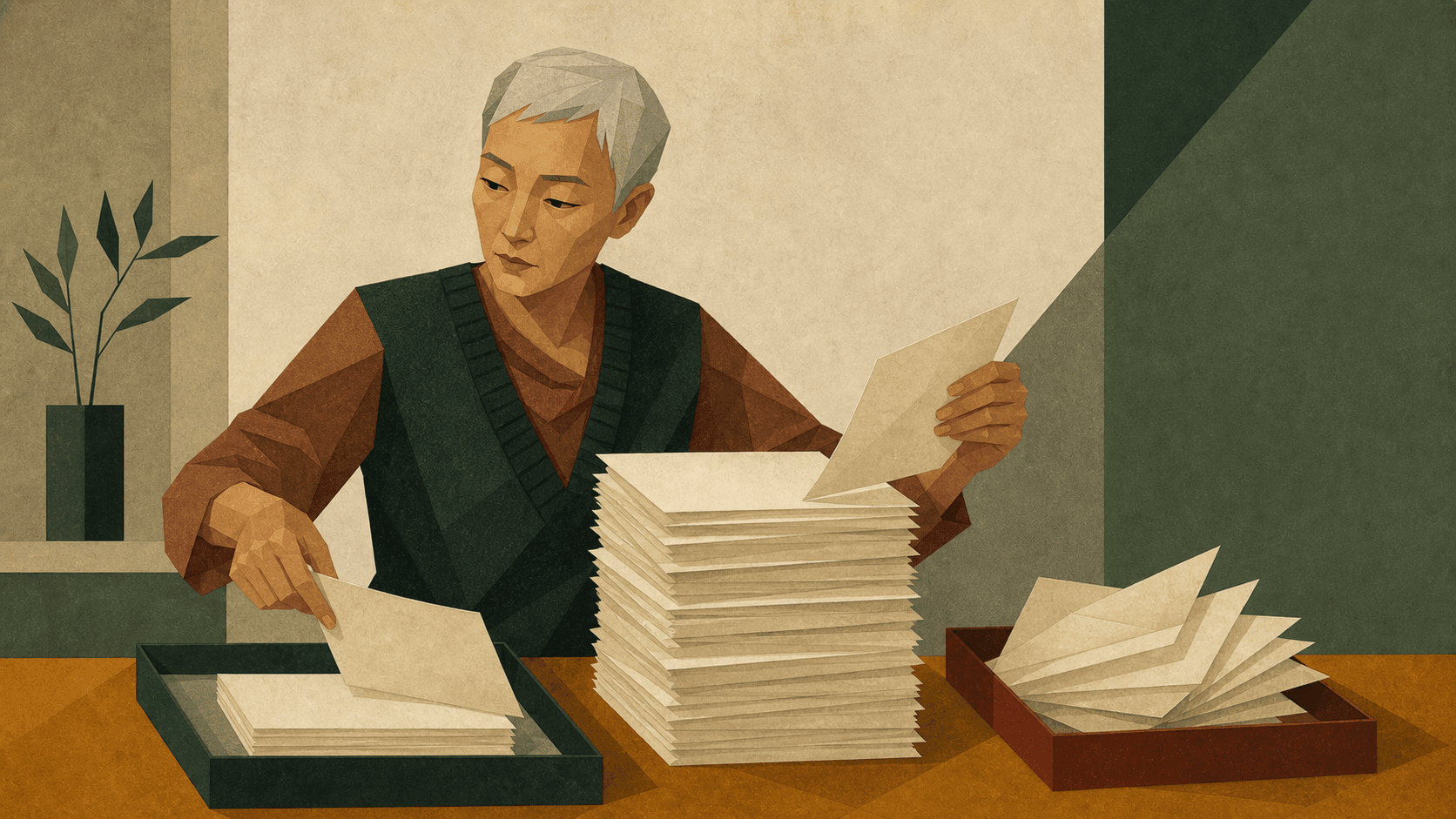
Draft one is the tall stack. Draft two starts with the two trays: what survives and what gets rewritten.
Is this the stalled-draft problem or the changed-plan problem?
They look alike from the outside: a large manuscript and a feeling that the plot is not the plot. They need opposite procedures. A stalled draft needs cause and effect found inside the scenes you already have. A changed plan needs the scenes you already have tested against new decisions. Do not inventory scenes for "what changes" if the thing that changed was your mind.
One more variant, for completeness. If you are still mid-draft and the story has walked away from the outline, that is a third case, and the divergence guide handles it without stopping the draft. This page assumes the draft is done.
Step 1: write down the decisions that changed
Before you look at a single scene, list the decisions draft one did not know about. Number them. Every later step tests scenes against this list, so a vague list produces a vague inventory.
The example running through this article is fictional. The Orchard is a family novel. Nell and her brother Wyn run their late father's orchard; draft one ends with Nell selling it. By the time the writer reached the end, four decisions had changed:
- Nell keeps the orchard. Wyn is the one who leaves.
- The lawsuit with the neighbour over the boundary is cut. It ran fourteen scenes.
- Their mother's illness begins in act one, not act two.
- Wyn's wife, Cass, becomes a point-of-view character in act three.
A decision is an ending, a cut thread, a moved reveal, a new point of view, a merged or removed character. "Make the middle better" is not a decision. It is a wish, and the inventory cannot test scenes against a wish.
Include decisions you are unsure about, with a question mark. Decision 4 might be one. The inventory will tell you what it costs, and that settles it.
Step 2: inventory the scenes that survive
One line per scene, the decisions it touches, and one mark: survives, rewrite, or cut. The question is not what changes in the scene. That is the stalled-draft inventory. The question is whether the scene is still true under the new decisions.
A section of the inventory for The Orchard:
| Scene | Decisions it touches | Mark |
|---|---|---|
| Nell finds the survey stakes on the boundary | 2 | Cut |
| Wyn argues with Nell about the buyer's offer | 1 | Rewrite: the argument is now about Wyn leaving |
| The mother's fall in the packing shed (chapter 22) | 3 | Rewrite: moves to act one |
| Harvest with the seasonal crew | none | Survives? |
| Nell meets the neighbour's lawyer | 2 | Cut |
| Cass tells Nell she is pregnant | 4 | Rewrite: now from Cass's point of view |
| Nell signs the sale | 1 | Cut |
| The frost night | none | Survives |
Two rules for the marks.
A scene survives only if no decision touches it and it still causes something that survives. The second condition matters. The harvest scene is untouched by any decision, and in draft one it set up the lawyer meeting, which is now cut. It may be orphaned. Mark those "survives?" and come back in step 5.
If the only reason a scene exists is a decision you have cut, it is a cut, not a rewrite. Writers mark "rewrite" on scenes they like. The survey-stakes scene has a lovely paragraph about the light through the trees. It is still a lawsuit scene. Cut it and keep the paragraph.
I know the inventory of an eight-hundred-page draft is a full day. It is still shorter than rewriting act one and finding out in act three that half of it served the old ending.
Step 3: mark the scenes that only served a cut decision
Go through each cut decision and list every scene whose job was to serve it. These are the easiest cuts and the best disguised, because many of them also hold good material: a character moment, a setting, a line you would defend. Cut the scene. Move the material to a cut file.
The lawsuit ran fourteen scenes. Six were pure lawsuit: stakes, lawyer, hearing, appeal. Eight were mixed. The lawyer meeting also introduced the neighbour's son, who matters at the end because he is the one Nell hires when Wyn leaves. For a mixed scene, extract the job that survives and hand it to a scene that survives. The neighbour's son can be introduced at the harvest, which is also how the harvest scene stops being orphaned.
Run the mirror check as well. A decision that has been strengthened rather than cut will need scenes added, not removed. Decision 3 moves the mother's illness to act one, which means act one now needs at least two scenes it does not have: the first sign of the illness, and the moment Nell and Wyn respond to it differently. Write those on a list called "new," which step 4 will fill.
Step 4: find the beats the new ending requires and does not yet have
Write the new ending as a scene, in a paragraph. Then work backward from it: what must be true for that ending to land, and which of those things does the draft already establish? Everything not yet established is a new beat.
The Orchard now ends with Nell refusing the buyer while Wyn and Cass drive away. For that to land:
The reader must believe Nell can run the orchard alone. Draft one had her fail at that, because the sale needed her to. Nothing establishes it. New beat: a scene where Nell handles something Wyn always handled. The frost night is already in the draft and already survives. Rewrite it so she runs it and he watches.
Wyn must have a reason to leave that is not "the plot needs him gone." His resentment is in the draft and survives. Cass's pregnancy gives the timing and now comes from Cass's point of view. Covered.
The mother must be alive or dead at the ending, and the draft must have decided which. Decision 3 moved the illness to act one, so the death now falls at the midpoint. New beat: the death, and the choice Nell makes at the funeral, which is the first time she says out loud that she is staying.
The refusal must happen on the page. Draft one has a signing scene, now cut. New beat: Nell refuses the buyer, in the same room, with the same pen on the table.
Four new beats. Two of them reuse scenes that survive. That is the true size of the rewrite, and it is smaller than the panic after finishing suggested.
Step 5: sequence what remains
Lay out the survives, rewrite, and new scenes in order, and check each adjacent pair for cause. Draft one's order was built for the sale. Draft two's order has to be built for the refusal, and some scenes will move a long way to get there.
For The Orchard, at beat level:
Act one. Father's funeral (survives). First sign of the mother's illness (new). Harvest, where the neighbour's son is introduced (survives, absorbs a job). Wyn and Nell argue about the buyer's approach (rewrite: the argument is about leaving). The mother's fall in the packing shed (rewrite: moved from chapter 22). Nell and Wyn respond differently to the fall (new).
Act two. The buyer's first offer (survives). Cass tells Nell she is pregnant (rewrite: Cass's point of view). The frost night, which Nell runs (rewrite). The mother's death (new). The funeral, where Nell says she is staying (new). Wyn hears it second-hand (new, small).
Act three. Cass's chapters (rewrite). Wyn's decision (rewrite from the old sale-argument material). Nell refuses the buyer (new). Wyn and Cass leave (rewrite). Nell hires the neighbour's son (survives).
Now go back to the "survives?" marks. The harvest survives, because it introduces the son and sets up the frost night. Any scene still marked "survives?" with nothing pointing out of it is orphaned, and it gets one of the three verdicts from step 2.
If several threads are sharing this sequence, the worked plot outline example shows how to merge them without dropping one. If the sequence has a gap you cannot explain, the plot hole guide is the next stop.
Step 6: commit to chapter detail only for act one
Write chapter-level detail for act one of draft two and leave acts two and three at beat level. Act one changed the most, because decision 3 moved the illness into it, and it is the act you will write first. By the time you reach act two, the rewritten act one will have changed what act two needs.
Chapter detail means, for each chapter: the point-of-view character, what happens, what changes by the end, and which later beat it causes. Six or eight lines. For The Orchard, act one is twelve chapters, so twelve short entries.
Acts two and three stay at one line per beat with the mark beside it: survives, rewrite, new. That is a plan you can steer by without pretending to know what Cass's voice does to act three before you have written her.
Draft one already taught you the lesson here. Detailed plans past the horizon go stale. Reopen this outline at each act break and re-run steps 2 to 5 on what you now know. If the draft leaves the plan mid-act, the divergence guide covers how to decide without stopping.
How do you map draft one and build draft two in Scyn?
One map of draft one, a two-colour pass for survives versus rewrite, the cut scenes removed, and then the arrows redrawn toward the new ending.
Create one node per draft-one scene with its chapter tag. Plain titles: "Mother's fall in the packing shed," not the chapter's name. Colour every node that survives green and every rewrite ochre. Delete the cut nodes. The cut file lives in your documents, not on the map, because the map is for what draft two contains.
Add the new beats in a third colour, say rust. At this point the map tells you the size of the job at a glance: how much green, how much ochre, how much rust. For The Orchard it is mostly green and ochre with six rust nodes, which is a rewrite, not a new book.
Now the arrows. Draft one's arrows pointed at the sale. Delete the ones that pointed at cut scenes and draw the new chain: "Harvest" to "Frost night" to "Nell refuses the buyer." Filter to act one and check that every node has an arrow out. That is the act you are about to detail, and an act-one scene with no arrow out is a scene draft two does not need.
A surviving node with no arrow out is orphaned. A rust node with no arrow in needs a setup you have not written. Scyn does not read the manuscript or choose the marks. It shows you the arrows you have drawn and refuses to imply the ones you have not. The visual plot mapping guide covers why that is easier to see on a canvas than in a scene list.
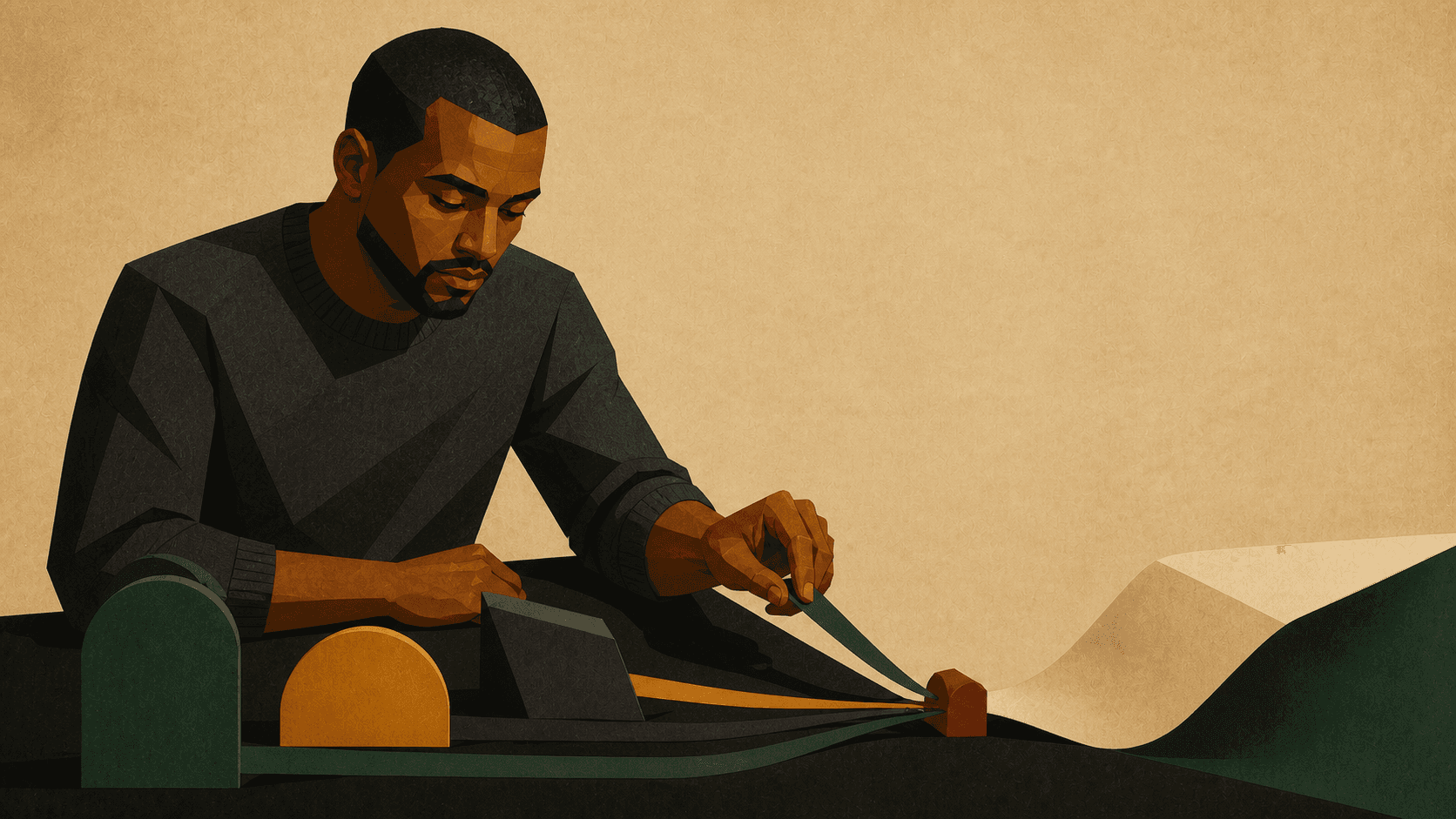 Draft two as a map: the surviving chain, the rewritten scenes, and the handful of new beats the new ending needs.
How long should a second-draft outline be?
As long as act one needs, and no longer. For The Orchard that is the four-line decisions list, twelve chapter entries for act one, and about twenty one-line beats for acts two and three. Three pages. If yours runs to thirty, you are re-outlining draft one rather than planning draft two, and the extra detail will be wrong by the time you reach it.
The manuscript is the evidence. The decisions are the verdict. The outline is only the list of what the verdict keeps.