Draft Stopped Following Your Outline? Revise or Keep Writing
A method for a draft that left its outline: name the divergence, test whether the draft earned it, list what it breaks, and re-plan only the next act.
By Elias Ward
Founding writer at Scyn
Key takeaways
- A draft that leaves its outline is new evidence about the story. Work out what the evidence means before you decide what to do with it.
- Name the divergence to the scene: the beat the outline asked for, and what the character did instead.
- Test whether an earlier drafted scene caused the new direction. If one did, the outline was wrong. If nothing set it up, the draft is drifting.
- List what the change breaks downstream: setups without payoffs, payoffs without setups, and motivations no longer earned.
- Give every remaining beat one verdict: keep, re-derive, or cut. Re-anchor the five fixed points, then re-plan only the next two or three chapters.
- Keep drafting to the next act break before you stop to re-plan, unless the next scene depends on a decision you have not made.
You spent weeks on the outline. Chapter eleven was going to be the betrayal. You sat down to write it and your translator refused. He confessed instead, to the person he was supposed to betray, and the scene is the best thing in the book so far. Now chapters twelve to twenty describe a story that no longer exists, and you have two voices arguing in your head. One says revise the outline before you write another word. The other says the characters know better than the plan, so keep going and sort it out in the second draft.
Both voices are half right, which is why the argument never ends. The outline was your best guess before you had lived with these people for 40,000 words. The draft is a better guess in one place and a worse guess in others. The job is to work out which is which, beat by beat. That takes an afternoon, not a month, and you do not have to choose between the plan and the draft as a whole.
This is a different problem from a draft that has stopped moving. If your scenes happen and nothing changes, you want the 60,000-word rescue instead. This page is for the opposite case: plenty is happening, and none of it is what you planned.
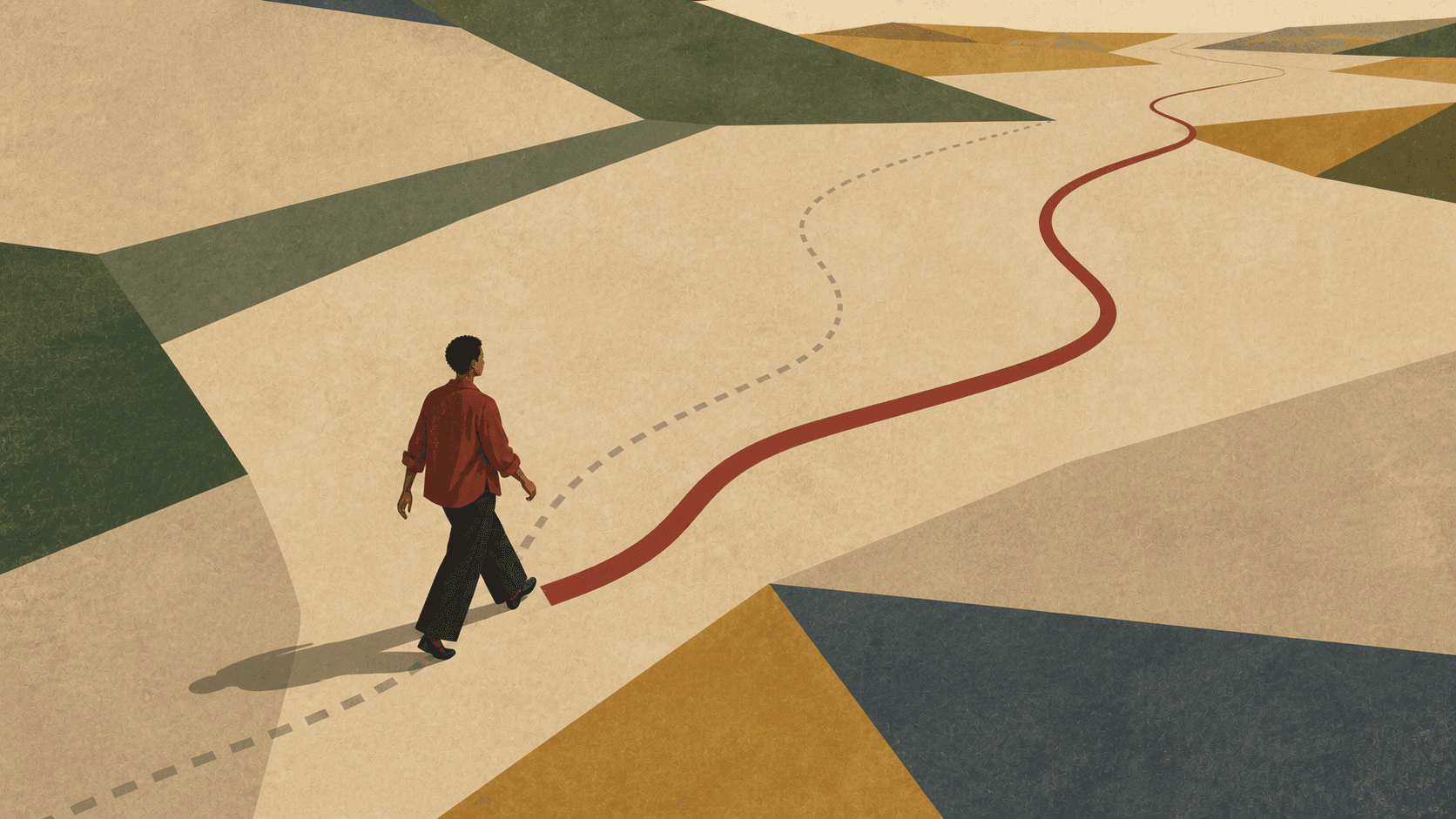
The dotted line is the outline. The solid line is the draft. The question is where they should meet again.
Which scene left the plan, and what happened instead?
Write the divergence as two lines before you decide anything: the beat the outline asked for, and the thing the character did instead. "The draft stopped following the outline" is a feeling, and you cannot revise a feeling. "Chapter eleven. Outline: Teo forges the envoy's seal and hands his sister's location to the guard captain. Draft: Teo burns the seal and tells the envoy everything" is a fact you can work with.
The example running through this article is a fictional draft. Teo is a court translator in a coastal city. The guard captain holds his sister as leverage to make him spy on a visiting envoy. The outline had Teo betray the envoy at the end of act one, then spend the middle of the book trying to undo it. The draft has him confess instead.
Two things to check while you write those lines.
First, find the earliest scene that does not match, not the loudest. The confession in chapter eleven may have been decided in chapter nine, when the envoy stepped between Teo's sister and a search party and Teo watched him do it. If chapter nine was not in the outline either, chapter nine is your divergence. The confession is its consequence.
Second, record what the character did, not what you felt. "Teo did not want to betray him" is your reading. "Teo burned the seal" is what is on the page. The second one is the evidence.
Put both lines at the top of a fresh page. Everything below depends on them.
Did the draft earn the change, or is it drift?
The test is causal. Look backward from the diverged scene and name the earlier drafted scene that made the new action the likelier one. If you can point at it, the outline was wrong and the draft corrected it. If you cannot, the draft is drifting, and the fact that the scene was a joy to write does not change that.
"The characters came alive" is the phrase everyone reaches for, and it covers two different events. In one, you wrote a scene in chapter nine where the envoy protected Teo's sister on impulse, and by chapter eleven Teo could not betray a man who had done that. The confession is the draft's own logic catching up with you. In the other, you got bored of the betrayal, or nervous about writing a scene where your protagonist does something ugly, and the confession arrived from nowhere. That is not the character speaking. That is avoidance with good prose on top.
Three questions separate them:
- Which earlier scene changed what Teo knew, wanted, or owed, so that the new action followed from it?
- Would a reader who reached chapter eleven be surprised in the good way (I should have seen that coming) or the bad way (where did that come from)?
- If you deleted the diverged scene and wrote the outlined beat instead, which earlier scene would now read as a broken promise?
If the first question has an answer, the change is earned. If the third question names a scene, the outline was already broken before you noticed. Chapter nine promised the reader something the betrayal would have cancelled.
If none of the three has an answer, you have two honest options. Revert to the outlined beat. Or keep the new beat and go back later to plant its cause. The second choice is often the better book, and it is more work, and you should know that before you pick it.
Drift has a signature worth learning. The new direction is easier for the protagonist: fewer costs, less exposure, a conversation instead of a crime. Earned changes tend to cost more, not less. Teo's confession puts his sister in immediate danger. That is a point in its favour.
What does the change break downstream?
List three kinds of damage before you touch the outline: setups that now have no payoff, payoffs that now have no setup, and motivations that are no longer earned. Do it for every remaining planned beat, in a table, in an hour. You are not rewriting anything yet. You are measuring the problem, and it is smaller than the panic suggests.
Here is the table for Teo's draft, with the divergence in chapter eleven and the outline running to chapter twenty:
| Planned beat | Depended on the betrayal? | What breaks |
|---|---|---|
| Ch 12: The captain arrests the envoy on Teo's evidence | Yes | Payoff without setup. No evidence was handed over. |
| Ch 13: Teo bargains for his sister's release | Partly | The motive survives. The leverage does not. He has nothing to trade. |
| Ch 14: The envoy's ship is searched; the forged seal found | Yes | Setup without payoff. The seal forged in chapter six is now ash. |
| Ch 15: The sister learns of the betrayal, refuses to see Teo | Yes | Motivation no longer earned. She has nothing to be angry about. |
| Ch 17: Midpoint. Teo realises the envoy was protecting her | Already happened | The beat moved. The draft did this in chapter nine. |
| Ch 19: Trial. Teo testifies against himself | No | Survives, though the confession now lands differently. He has already confessed once. |
| Ch 20: Sister freed, Teo exiled | No | Survives. |
The three categories:
A setup without a payoff is something you planted that the draft now walks past. The forged seal in chapter six was there so it could be found in chapter fourteen. Either give it a new payoff or cut the plant in revision.
A payoff without a setup is a later beat that assumed the outlined event happened. The arrest in chapter twelve needs evidence that no longer exists.
A motivation no longer earned is a character reacting to something that never took place. The sister's fury in chapter fifteen was aimed at a betrayal she can no longer have heard about.
One more row type turns up in most tables, and it is not damage. A planned beat that has already happened earlier than planned means the draft re-sequenced your structure. Teo's midpoint realisation happened in chapter nine instead of seventeen. Note it, because the middle of the book now needs a different turn.
Count the rows. In the example, four of seven remaining beats break, one moved, two survive. That is a re-plan of the middle. It is not a new book.
Keep, re-derive, or cut: decide each remaining beat
Every remaining beat gets one of three verdicts. Keep it as written. Re-derive it, which means keep the job it does but rebuild its content from what the draft now says. Cut it, because the job no longer exists. Decide from the job, not from how much you liked the planned scene.
Every beat in an outline has a job. Chapter twelve's arrest does the job "the envoy loses his freedom and Teo is the cause." The confession has not removed that job. It has removed the mechanism. Re-derive: the captain was expecting the betrayal, and when Teo fails to deliver, the captain arrests the envoy anyway on fabricated evidence and tells Teo he will be named as the source. Same job. New cause, and this one comes from the draft.
Chapter fourteen's ship search existed to find the forged seal. The seal is gone. The job was "the envoy's danger becomes physical and public." Does the draft still need that? Probably, but the search no longer does it. Cut the beat, and write the job on a separate line so it can find a new home.
Chapter fifteen's estrangement can be re-derived in one move. The sister is not angry that Teo betrayed the envoy. She is angry that he confessed and made her the next target. That is earned by the draft, and it is a sharper scene than the outlined one.
Chapters nineteen and twenty keep.
Two mistakes show up at this step. The first is re-deriving everything to rescue the outline when cutting is right. If you find yourself inventing a second forged object so chapter fourteen can survive, stop. The second is keeping beats because they were strong in the plan. The plan is not the book. The beat has to be strong in this draft.
Some verdicts will surface a mirror problem: an earlier scene that now needs a plant it does not have. Put those on a list called "seed later." They are second-draft work. They do not stop you drafting today.
Re-anchor the five fixed points
Before you re-plan any chapters, check the five points the whole outline hangs from: the protagonist's problem, the catalyst, the midpoint change, the crisis, and the resolution. If the divergence moved one of them, say which. If it moved none, you have a routing problem rather than a structural one, and the re-plan will be short.
These five are the skeleton from the novel outlining guide. Run them for Teo:
The problem is unchanged. His sister is held; his cooperation is the price.
The catalyst is unchanged. The captain's demand in chapter three still starts the story.
The midpoint moved. The outline had Teo's understanding change at chapter seventeen. The draft changed it at chapter nine. That leaves the actual middle of the book without a turn, which is the real structural cost of the confession. Something else has to change Teo's method or understanding around the halfway mark. That is a new beat to find, and it is the most important line in your re-plan.
The crisis holds its shape. Teo will have to choose between his sister and the envoy. The mechanism is different now, because the envoy trusts him.
The resolution is under review. Exile still fits. Ask whether it is still the right price. A man who confessed early and lost anyway might be owed something harsher or something kinder, and the draft will tell you which by chapter eighteen.
If the divergence has moved the ending itself, that is a bigger decision, and it may be the right one. Do not rebuild an ending mid-draft unless you cannot write the next chapter without knowing it. The second draft outlining guide covers rebuilding from a changed ending once the draft is finished, which is where that work belongs.
Re-plan only the next two or three chapters
Rewrite the outline in detail only as far as the next act break, at most three chapters. Everything past that goes back to beat level: one line per beat with its verdict beside it. Detailed plans for chapters you will not reach for a month go stale, and this outline has already gone stale once.
For Teo, the next act break falls at chapter fourteen. The re-plan looks like this:
Chapter twelve. The captain summons Teo, learns there is no evidence, and arrests the envoy on a forged charge anyway. He tells Teo the envoy will believe Teo supplied it. Teo cannot deny it without exposing the confession.
Chapter thirteen. Teo tries to reach his sister before the captain does. He fails. She has already been moved.
Chapter fourteen. Teo gets one visit with the imprisoned envoy. The envoy asks one question: did you? Teo says no. The envoy does not believe him. End of act one, and Teo has lost both people he confessed to protect.
Then, at one line each: chapter fifteen, sister's anger, re-derived. Chapter sixteen, open. Chapter seventeen, new midpoint turn, unknown. Chapter eighteen, open. Chapter nineteen, trial, keep. Chapter twenty, exile, keep, price under review.
Two lines say "open" and one says "unknown." Leave them. A beat labelled "midpoint turn, unknown" is more useful than a scene invented tonight to make the outline look whole. You will know more about what the confession did to Teo after you have written him through three chapters of its consequences.
When should you stop drafting to re-plan?
Keep drafting until the next act break or the next scene that depends on a decision you have not made, whichever comes first. Do not stop in the middle of a scene to re-outline. A scene interrupted for replanning is, in my experience, the scene where the draft ends.
The practical version: if the next scene can be written with what you already know, write it. Divergence in chapter eleven, act break at fourteen? Draft to fourteen, then do the table. If chapter twelve cannot be written without knowing whether the envoy is arrested, decide that one beat and carry on. You do not need verdicts on all seven remaining beats to write the next one.
There is a counter-rule. If you have deviated three times in a row, and each time the new direction made things easier for the protagonist, stop now. That is drift, and it compounds. Three easy turns in a row means the draft is steering away from the scene you are afraid to write.
Keep drafting when the next scene is clear and the diverged thread is costing the protagonist something. Stop and re-plan when you reach the act break, or when the next scene needs a decision you cannot make, or when the deviations are all in the direction of comfort.
How do you see what the change breaks in Scyn?
Map the scenes you drafted, not the outline. One node per scene, arrows only for consequences that exist on the page. Then add the remaining planned beats in a second colour and read the arrows that no longer land.
The first eleven nodes are the draft. Give them plain titles: "Captain takes the sister," "Teo forges the seal," "Envoy shields the sister," "Teo burns the seal and confesses." Tag each with its chapter so you can filter by act.
Then add the planned beats from chapter twelve onward as their own nodes, in a different colour. Clay for planned and green for drafted works well. Draw arrows only where a drafted scene causes a later one. Chapter nine's shielding points to chapter eleven's confession. Chapter six's forged seal points to nothing, and that dead end is your setup without a payoff. The planned arrest node in chapter twelve has no arrow arriving from any drafted scene, and that is your payoff without a setup.
Filter to act two and look at the planned nodes alone. The ones with no incoming arrow are the ones the confession orphaned. Recolour each as you give it a verdict: keep, re-derive, cut. The re-derived ones get a new incoming arrow from the drafted scene that now causes them.
Scyn does not read the manuscript and does not make the verdicts. What it refuses to do is pretend an arrow exists when you have not drawn one, and that refusal is the point. The visual plot mapping guide covers why a spatial map shows these gaps and a linear outline hides them. If the gaps turn out to be older than the divergence, the plot hole guide picks up from there.
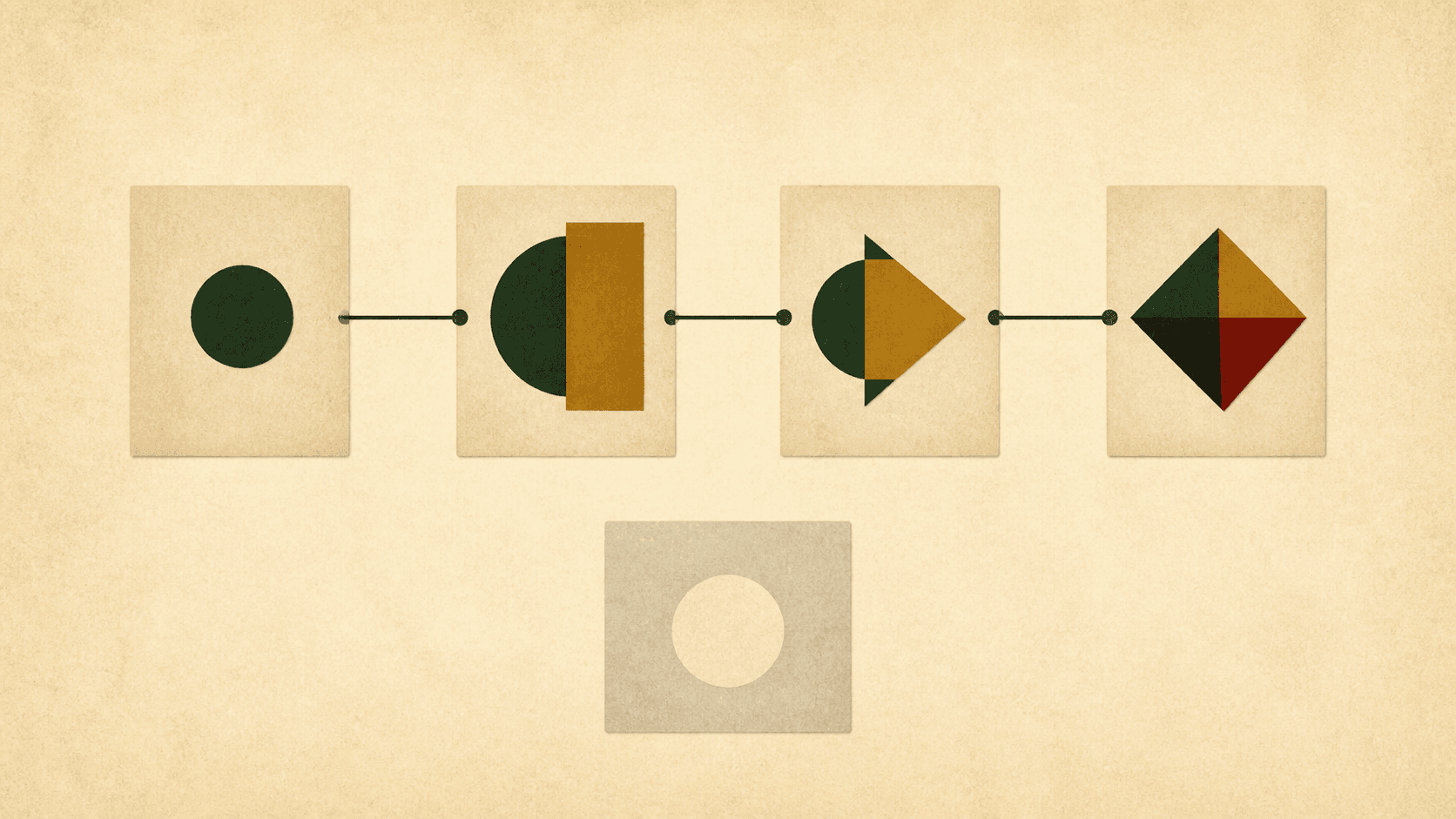 A planned beat with no incoming arrow from the draft is a payoff that lost its setup. That is what you are looking for.
What happens to the outline afterwards?
The outline becomes a record of two things: the beats you are still steering toward, and the verdicts you gave the rest. That is all it needs to be. It was never a contract, and a draft that leaves it once will leave it again, around the next act break.
Run the same procedure each time. Name the divergence. Test it for a cause. Table the damage. Verdict the beats. Check the five anchors. Re-plan three chapters. The second time through takes twenty minutes, and by the third you will notice that the draft diverges where the outline was thinnest. That is useful to know about your outlining, and it is a different article.